Sourcing bulk architectural materials overseas always carries inherent risks for buyers. A flawless sample does not guarantee a flawless container load upon arrival. As demand for sustainable, moisture-proof interior cladding rises rapidly, the global market is flooded with widely varied grades of product. Importers must urgently distinguish between authentic, high-density composites and subpar PVC foam disguised as premium boards. Failing to spot these differences can lead to disastrous project failures and severe reputational damage. This guide provides a systematic, zero-assumptions quality control framework for inspecting bulk orders. You will learn exactly how to verify material density, adhesion strength, and environmental compliance effectively. We will show you actionable steps to minimize defect rates and protect your margins before the shipping container is permanently sealed.
Key Takeaways
Visual checks are insufficient; mechanical and chemical verifications (like density and adhesion tests) are mandatory for bulk validation.
Authentic panels require specific extrusion densities to ensure structural integrity and prevent warping.
Surface film lamination (especially for high-end textures) must be tested for peel resistance and edge sealing.
Strict compliance with international emission standards (VOCs/Formaldehyde) is non-negotiable for commercial project use.
Ocean freight packaging and container loading protocols dictate the final delivered quality.
The Risk of Surface-Level Evaluation in Bulk Sourcing
Accepting supplier claims at face value often creates serious post-shipment nightmares. Buyers frequently discover severe warping, rapid delamination, or toxic off-gassing upon delivery. A visually perfect pre-production sample provides a false sense of security. Suppliers might present premium samples initially during the negotiation phase. However, they sometimes substitute lower-grade recycled plastics during bulk manufacturing. They might also use cheap adhesives to meet aggressive price points. This deceptive "bait and switch" tactic severely hurts importers and ruins project timelines.
Domestic contractors expect consistent performance across every single board they install. A genuine bamboo charcoal panel provides exceptional durability and stability. Substandard copies compromise your entire project. To avoid this trap, you need definitive success criteria before mass production begins. Establish a measurable Acceptable Quality Limit (AQL) early on. You must force the factory to meet this standard before releasing the final payment. Set strict AQL parameters for major and minor defects. This ensures accountability and protects your financial investment.
Real-world experience shows visual inspections miss internal structural flaws. You cannot simply look at a board and determine its core strength. You must implement physical testing protocols. Relying purely on factory-provided photos invites catastrophic quality failures. Importers must bridge this gap using third-party inspectors and rigid testing checklists.
Core Material Quality and Density Verification
Distinguishing true composites from standard WPC or low-density PVC foam is crucial. True panels exhibit a uniform dark core throughout the entire cross-section. You should not see any porous bubbling inside the material. Use a magnifying loupe to inspect the core closely during factory visits. Air pockets indicate a weak extrusion process. These hollow spaces cause the board to crush easily under pressure.
You must specify exact density requirements in your purchase order. Use specific gravity metrics as a hard baseline for factory production. Lighter panels often indicate excessive chemical foaming. This excessive foaming severely compromises screw-holding capacity. It also reduces overall impact resistance during daily use. We strongly recommend weighing random samples during pre-shipment inspections. Compare these weights against your approved golden sample.
Implement a strict flat-surface test to measure rigidity and warpage. Place the boards on a perfectly leveled steel table. Measure bowing over standard lengths, such as 2.9m or 3.0m boards. You must contractually define acceptable deflection limits beforehand. A standard tolerance might allow for no more than 2mm of deflection per meter.
Density Verification Best Practices
Request a raw substrate sample before lamination occurs.
Measure the exact board thickness using digital calipers.
Weigh the cut piece and calculate its specific gravity.
Compare the internal cell structure against the approved golden sample.
By enforcing these density checks, you prevent soft, unworkable boards from entering your supply chain. Installers rely on dense cores to drive screws securely without cracking the surface. Failing to verify density leads to massive installation failures on job sites.
Surface Lamination and Finish Adhesion Standards
Factory lamination quality dictates the lifespan of your interior cladding. You must confirm the use of PUR (Polyurethane Reactive) hot melt glue. Factories sometimes substitute it for standard cold glues to cut costs. PUR glue ensures the decorative film stays firmly attached. It will not peel in high-humidity or fluctuating temperature environments. Cold glue degrades rapidly when exposed to sunlight or ambient heat.
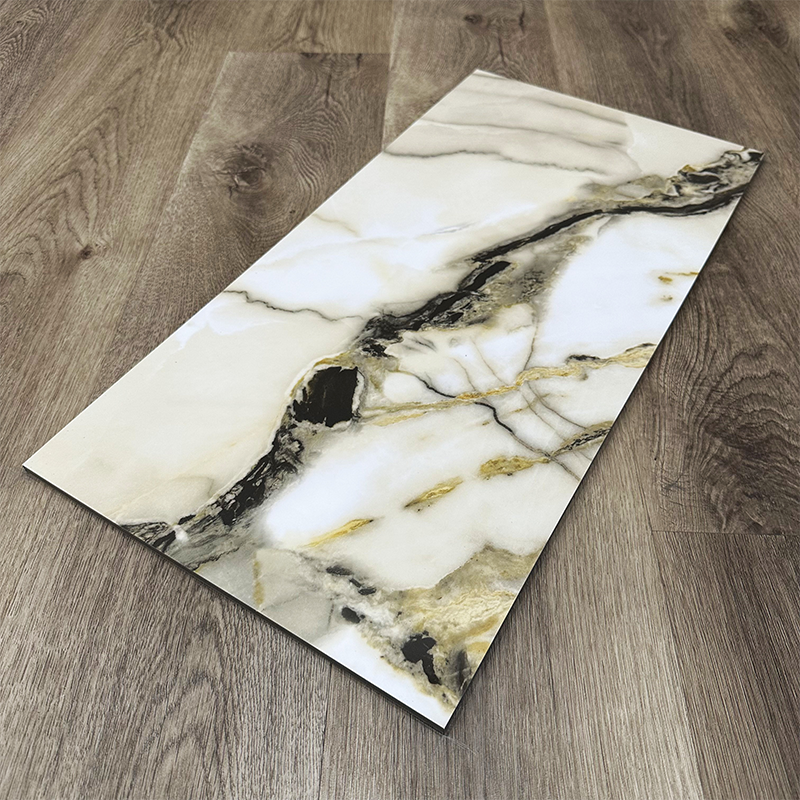
When importing premium variants like a Luxury Gilded Marble Bamboo Charcoal Panel, strict testing is necessary. These metallic or high-gloss films require specific scratch-resistance checks. Use standardized pencil hardness tests to verify the surface durability. You should also demand UV-fading tests for such premium finishes. High-end residential projects cannot tolerate discoloration after a few months of sunlight exposure.
Edge and seam integrity needs close attention during bulk inspections. Inspect the cut edges for any fraying or film overhang. Look carefully for micro-separations between the substrate and the decorative layer. Even tiny separations can allow moisture to penetrate over time. This moisture causes the film to bubble and eventually fall off.
Common Mistakes in Adhesion Testing
Relying only on a visual inspection of the surface film.
Failing to test peel strength at the very corners of the board.
Ignoring temperature fluctuations during the peel test process.
Skipping cross-hatch tape tests on high-gloss finishes.
Environmental Compliance and Fire Safety Certifications
Commercial projects demand rigorous safety and environmental compliance. You must demand third-party verifiable lab reports from your supplier. Do not accept internally generated factory certificates. Use recognized institutions like SGS or Intertek for validation. Test specifically for Formaldehyde and VOC emissions. Ensure the results meet your destination country's local regulations. Frameworks like FloorScore, CE, or EPA TSCA Title VI are standard expectations.
Verify the manufacturer's fire rating claims thoroughly before ordering. Ask for proof of Class B1 or Class A certifications. You should perform spot burn tests on random production samples. Hold a direct flame to the edge for ten seconds. This validates whether the material actually self-extinguishes. It also proves the board does not produce excessive toxic smoke. High smoke production often indicates cheap, uncertified plastic fillers.
Moisture resistance requires physical validation during your QC process. Conduct water submersion tests on production-run cutoffs. Leave them submerged in room-temperature water for 24 hours. Measure the swelling thickness using precise digital calipers. This verifies the factory's waterproofing claims accurately. True authentic composites should exhibit virtually zero dimensional expansion after full submersion.
Packaging, Loading, and Transit Pre-Inspection
Ocean freight conditions are harsh and unpredictable. Poor packaging ruins perfectly manufactured goods before they arrive. Panels must sit entirely flat on rigid, reinforced pallets. Overhanging ends will permanently warp during long ocean transit. Pallets must match the exact length of the boards. Custom pallet sizing prevents gravity from bending the panel edges downward.
Surface protection is a mandatory requirement for high-end decorative boards. Ensure every board is separated by pearl cotton (EPE) foam. Alternatively, use a high-quality protective plastic film on the decorative face. This prevents devastating friction scratches during vessel movement. The constant vibration of a cargo ship easily damages unprotected surfaces.
Container loading execution demands strict oversight by your inspector. Check for adequate corner protections around all pallet edges. Verify the strapping tension remains tight but non-damaging. You must verify the use of desiccants inside the container. Condensation builds up rapidly during long shipping routes. This phenomenon is known as "container rain." Desiccants prevent mold formation on the outer packaging.
Use the following container loading quality audit chart to manage loading risks.
Inspection Item
Standard Requirement
Risk if Failed
Pallet Rigidity
Thick reinforced wood matching board length
Permanent bowing and un-installable panels
Surface Separation
EPE foam or protective plastic film layers
Deep friction scratches destroying the finish
Moisture Control
Hanging desiccant bags spaced evenly
Mold growth on cartons and musty odors
Corner Protection
Rigid cardboard or plastic corner guards
Crushed edges making joints impossible to align
Shortlisting Logic and Supplier Quality Agreements (SQA)
Your sourcing strategy requires binding legal frameworks to succeed. Incorporate this inspection checklist directly into your Supplier Quality Agreement. Make it crystal clear to the factory manager beforehand. State that third-party pre-shipment inspections (PSI) will utilize these exact criteria. If you hide your standards until inspection day, factories will push back aggressively.
Set realistic but highly strict defect thresholds in writing. We recommend adopting standard Acceptable Quality Limit (AQL) metrics. Use AQL 1.5 for major defects. Use AQL 4.0 for minor defects. This provides a quantifiable baseline for acceptance or rejection. If a lot fails these AQL limits, the factory must rework it at their own expense.
Require a physical "golden sample" before mass production begins. Both parties must sign and date this specific piece. Keep one half and leave the other half at the factory. This golden sample serves as the undeniable baseline. You will use it for all future mass production evaluations. It eliminates subjective arguments over color or texture deviations. By testing a true Bamboo Charcoal Panel golden sample, you lock in your structural expectations.
Conclusion
Sourcing success relies entirely on objective, repeatable inspection criteria. Supplier relationships alone cannot guarantee consistent mass production quality. Treat your pre-shipment inspection as a critical upfront investment. It is never just an operational afterthought. Deploying this systematic checklist ensures your imported materials perform flawlessly. They will meet the rigorous standards demanded by domestic contractors and architects.
Draft a comprehensive Supplier Quality Agreement detailing your exact AQL limits.
Sign and seal a golden sample for both structural and visual reference.
Hire an independent third-party inspector to execute physical stress tests.
Demand verifiable lab reports for all environmental and fire safety claims.
FAQ
Q: What is the easiest way to test the density of a bamboo charcoal panel at the factory?
A: Weighing a standardized cut piece against an approved golden sample is best. You should also examine the cross-section for air pockets using a magnifying loupe.
Q: How can I test the lamination strength during a pre-shipment inspection?
A: Conduct a cross-hatch tape test on the surface. Alternatively, perform a manual peel test on a randomly selected panel edge. This effectively checks the PUR adhesive's bonding strength.
Q: What should the standard packaging look like for wholesale panel imports?
A: Expect thick corrugated cartons. Factories must apply protective plastic film on the panel face. They should place EPE foam between panels. Use reinforced wooden pallets with edge guards and secure strapping.
Q: Do bamboo charcoal panels require specific acclimatization after shipping?
A: Yes. To ensure optimal installation, panels should acclimate to the local environment's temperature and humidity. Leave them in the space for 48 hours prior to installation. However, their dimensional stability remains superior to traditional wood.
The company was established in 2018 and specializes in new environmentally friendly indoor decorative materials such as SPC flooring, WPC flooring, carbon crystal flooring, wood veneer panels, and carbon crystal wall panels.