You have selected bamboo panels for their striking aesthetic and moisture-resistant properties. You are now at a critical stage in the procurement process. Selecting the wrong thickness can easily derail your project timeline and budget. We must view thickness not just as a basic physical dimension. It acts as a primary driver of structural stability. It dictates your installation methodology, including routing and bending limits. It also determines the long-term durability of your interior spaces. You need an evidence-based framework for evaluating these materials before making bulk purchases. We will explore how to assess panel thickness based on substrate conditions. We will look at traffic levels in your specific environments. Finally, you will understand how different finish requirements demand specific core densities.
Key Takeaways
Application-Driven Choice: 5mm panels are ideal for ceilings and curved surfaces, while 8mm panels represent the optimal balance for rigid, high-end residential and commercial walls.
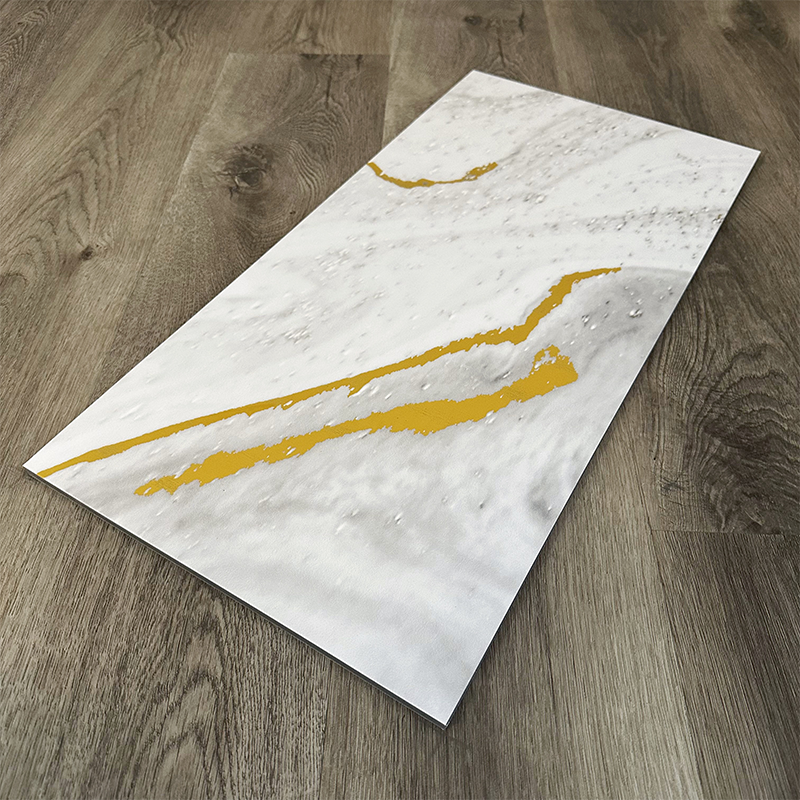
Finish Compatibility: Premium surface finishes—such as an 8mm PET Gilded Marble Bamboo Charcoal Panel—require a thicker, denser core to prevent surface warping and support high-gloss films.
Installation Reality: Thinner panels demand perfectly flat substrates to avoid "telegraphing" (showing wall imperfections), whereas thicker panels can bridge minor surface variations.
Cornering & Routing: 8mm panels allow for precise V-grooving to create seamless 90-degree folded corners without snapping the face film.
The Business Impact of Panel Thickness (Framing the Decision)
Evaluating material lifespan against upfront cost is crucial for any commercial or residential build. Thinner panels generally cost less per square foot. However, they frequently demand extensive wall preparation. Installers must skim, sand, and level uneven drywall before mounting thin materials. These labor-intensive steps often erase any initial material savings. A standard charcoal wall panel with an adequate thickness mitigates these hidden labor costs by bridging minor wall imperfections.
Aesthetic integrity relies entirely on structural rigidity. Luxury finishes like heavy PVC or high-gloss PET require a solid foundation. If the core lacks density, the panel will eventually bow. Delamination becomes a significant risk over time. Thick cores provide the necessary tension to keep decorative surface films taut and visually flawless.
Project timelines also benefit from standardized thicknesses. When you specify a versatile thickness across a whole project, you streamline the installation process. You reduce the variety of aluminum joinery profiles required on site. Installers work faster because they do not have to switch between different trims or adjust adhesive volumes for varying panel depths. This standardization drastically accelerates the final fit-out phase.
Standard Charcoal Wall Panel Thicknesses: A Comparative Breakdown
Understanding the standard sizes helps you align material capabilities with your architectural needs. We have outlined the primary differences below.
Standard Thickness Comparison Chart
Thickness
Primary Use Case
Substrate Requirement
Impact Resistance
5mm
Ceilings, curves, bulkheads
Perfectly flat
Low
8mm
Feature walls, lobbies, wainscoting
Moderate variance allowed
High
12mm+
Commercial corridors, direct-to-stud
Can bridge studs
Extreme
5mm Panels: The Flexible Lightweight
These thin panels serve specific, highly controlled environments. We primarily recommend them for ceilings and elevated bulkheads. They also perform exceptionally well on tightly curved feature walls. Because they lack rigidity, you can bend them more easily around architectural columns.
However, you must respect their limitations. They are highly susceptible to impact damage. You should never place them in high-traffic hallways or commercial lobbies. Furthermore, they require a near-perfectly flat substrate. If you install them over existing pristine drywall, they work beautifully. If the wall has bumps or divots, the 5mm panel will mirror every single flaw.
8mm Panels: The Industry Sweet Spot
The 8mm format dominates the interior design market for good reason. It provides the perfect balance between manageable weight and structural integrity. You will find them used extensively for living room feature walls and high-end commercial lobbies. They excel in wainscoting applications where furniture might bump against the wall.
This thickness serves as the industry benchmark for premium finishes. Heavy luxury films require absolute dimensional stability. For example, a Charcoal Wall Panel,8mm PET Gilded Marble Bamboo Charcoal Panel provides the necessary core strength to keep highly reflective PET surfaces perfectly flat. Without this 8mm depth, high-gloss finishes would distort light and look cheap. Additionally, 8mm panels allow for flawless corner wrapping, which we will detail later.
12mm+ Panels: Heavy-Duty & Specialized Use
Thick panels cater to aggressive commercial environments. Hospitals, hotels, and transit hubs frequently specify 12mm or 15mm panels. They withstand heavy cart traffic and repeated impacts. They also offer specialized acoustic dampening properties for recording studios or private meeting rooms. In some jurisdictions, local building codes permit mounting these thick panels directly to wall studs.
These heavy-duty panels do have notable limitations. The increased weight requires mechanical fastening. You cannot rely on structural adhesives alone. You must use concealed screws or heavy-duty mounting clips. Consequently, shipping, handling, and labor costs increase significantly.
Key Evaluation Criteria for Choosing Your Panel Thickness
Selecting the right product requires a systematic evaluation of your job site. Use these specific criteria to guide your procurement decisions.
Substrate Condition & Prep Tolerances: Assess how much wall leveling your budget permits. Older buildings often feature wavy plaster. Thicker panels (8mm and above) offer excellent bridging capabilities. They float over minor wall deviations, hiding the imperfections behind a rigid facade.
Joinery and Cornering Techniques: Evaluate your need for seamless outside corners. Modern designs avoid bulky corner trims. Instead, installers use a V-groove router bit to cut away the back of the panel, leaving the front film intact. They then fold the panel 90 degrees. An 8mm panel provides enough core depth for a clean V-groove without compromising the structural integrity of the fold.
Impact Resistance Requirements: Map out the contact zones in your floor plan. Differentiate between low-contact areas and high-contact zones. Bedrooms and ceilings see almost zero physical impact. Hallways, lobbies, and reception desks endure daily wear and tear. Match the thickness to the anticipated physical abuse.
Adhesive vs. Mechanical Load: Analyze the weight-bearing capacity of your existing wall structure. Standard drywall can hold 8mm panels using high-grab polyurethane adhesives. However, if you upgrade to 12mm panels, you must ensure the wall structure can support the sheer weight without tearing the drywall paper face.
Implementation Risks: What Happens When You Choose the Wrong Thickness?
Contractors often try to cut corners by ordering thinner panels for vertical walls. This decision usually results in expensive callbacks and ruined aesthetics. You must understand the physical risks of improper specification.
Telegraphing & Wavy Reflections: The term "telegraphing" refers to a surface showing the hidden textures behind it. Applying a 5mm high-gloss panel over an uneven wall will cause severe light distortion. The thin panel bows into the hollows of the wall. When natural light hits the glossy surface, the reflections look wavy and cheap, completely ruining the high-end aesthetic.
Corner Snapping: Installers frequently attempt to back-cut and fold thin panels. A 5mm panel leaves virtually no margin for error during routing. The router bit often pierces the face veneer. Even if the cut succeeds, folding a thin core places too much stress on the surface film, resulting in a snapped corner during installation.
Thermal Expansion Buckling: Bamboo charcoal panels expand and contract slightly with temperature changes. Thinner panels lack adequate core density to resist warping. If you expose them to fluctuating temperatures or direct sunlight, they will buckle. This risk increases exponentially with dark-colored finishes, which absorb more solar heat.
Shortlisting Logic & Next Steps for Procurement
Now that you understand the mechanics of panel thickness, you can build a reliable procurement strategy. Follow these steps to ensure you order the correct materials for your teams.
First, define the zones across your project blueprint. Map out the architectural elements. Specify 5mm panels exclusively for ceilings, elevated bulkheads, and tight curves. Mandate 8mm panels for all primary vertical surfaces, feature walls, and wainscoting.
Second, verify the core density with your supplier. We strongly advise buyers to evaluate the actual weight and density of the bamboo charcoal core, not just the nominal thickness. A highly porous, poorly compressed 8mm panel will underperform a dense, heavily compressed 5mm panel. Ask for the density specifications (measured in kg/m³) before committing.
Finally, insist on requesting production samples. Instruct your procurement team to request minimum 12"x12" pieces. Do not just look at them. Hand them to your lead installer. Test their rigidity. Run a V-groove bit through them to test folding capabilities. Try to peel the surface film to test adhesion strength. Field testing guarantees success before you order a full shipping container.
Sample Evaluation Matrix
Test Type
Execution Method
Passing Criteria
Rigidity Test
Support panel on two ends, apply central weight.
Minimal deflection; snaps back to perfectly flat.
V-Groove Test
Route a 90-degree channel on the back and fold.
Film folds cleanly without tearing or stressing.
Adhesion Test
Score the film with a knife and apply strong tape.
Film remains firmly attached to the charcoal core.
Conclusion
While 5mm panels have their place in specialized overhead applications, 8mm remains the most reliable standard for professional interiors. It ensures structural integrity, visual perfection, and maximum installation efficiency. Pairing the right thickness with a premium finish guarantees a high-return interior upgrade that will not warp or dent over time. Protect your project timeline by standardizing on a thickness that bridges wall flaws and allows for seamless corner folding. We prompt you to contact our sales engineering team today. Ask for a comprehensive substrate assessment, request our latest technical specification sheets, or order an 8mm sample box for field testing.
FAQ
Q: Can I use 5mm charcoal panels for a TV background wall?
A: It is possible if the wall is perfectly flat, but 8mm is highly recommended to support the visual weight, provide better acoustic dampening, and prevent warping behind warm electronics.
Q: Does an 8mm PET Gilded Marble Bamboo Charcoal Panel require special installation tools?
A: No specialized heavy machinery is needed, but a high-quality router with a V-groove bit is necessary for seamless corner folding, alongside heavy-duty structural polyurethane adhesive.
Q: Will thicker panels reduce interior room space?
A: The difference between 5mm and 8mm is negligible (3mm) in terms of floor space, but the 8mm panel drastically improves the perceived quality and solidity of the wall.
Q: Can I mix different panel thicknesses in the same room?
A: Yes, but you must plan transitions carefully. Aluminum trim profiles or deliberate step-backs are required to manage the depth differences cleanly where 5mm and 8mm panels meet.
The company was established in 2018 and specializes in new environmentally friendly indoor decorative materials such as SPC flooring, WPC flooring, carbon crystal flooring, wood veneer panels, and carbon crystal wall panels.