The interior design market is rapidly shifting toward durable, moisture-resistant wall cladding. Many contractors now prefer modern alternatives over traditional drywall or wood. Designers face constant pressure to balance budget constraints against strict health regulations. While the core structural material guarantees strength, the decorative surface film determines aesthetic longevity, scratch resistance, and environmental safety. Premature fading or peeling often ruins otherwise perfect installations. We will explore the exact differences between Polyethylene Terephthalate (PET) and Polyvinyl Chloride (PVC) surface films. You will gain objective, evidence-based insights to help you choose the best compliance-aware and cost-effective finish for your next project. Understanding these crucial differences prevents costly replacements down the road. Choosing the wrong laminate layer compromises the entire build. This guide strips away marketing jargon to evaluate real-world performance metrics.
Key Takeaways
PET Films: Offer superior environmental compliance (zero VOCs/plasticizers), high scratch resistance, and anti-yellowing properties, making them ideal for premium or health-sensitive environments.
PVC Films: Dominate the budget sector due to high moldability, lower upfront costs, and vast texture varieties, but carry risks of plasticizer migration and long-term fading.
The Core Synergy: The performance of a carbon crystal panel is only as reliable as its lamination quality; choosing the right film depends heavily on the project's traffic levels and expected ROI.
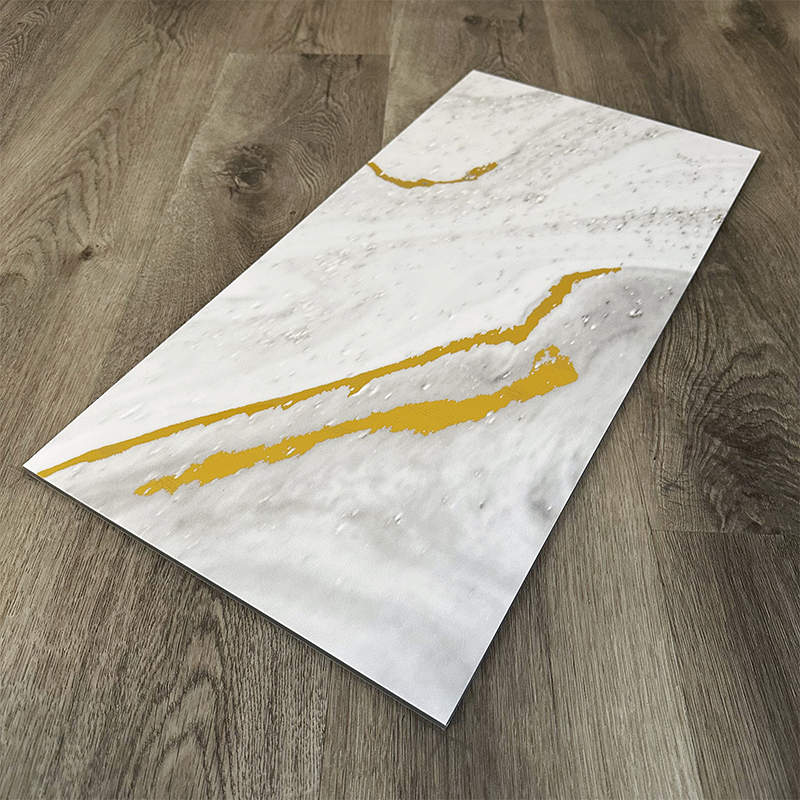
Aesthetic Trends: Premium variations, such as the PET Gilded Marble Bamboo Charcoal Panel, are displacing standard PVC finishes in high-end commercial applications.
The Role of Surface Films on a Carbon Crystal Panel
Modern interior cladding relies heavily on layered material science. We must first understand the anatomy of the material. The structural core consists of carbon powder, bamboo charcoal, and specialized resin. This combination creates a highly durable, rigid base. However, this raw core lacks aesthetic appeal. Manufacturers must apply a top decorative lamination layer to provide visual textures like wood grain or stone.
This layering introduces a significant business problem for contractors. Premature panel failure rarely happens within the core itself. When clients complain about delamination, color fading, or chemical off-gassing, they are experiencing a surface film failure. Sometimes, they experience an adhesive failure. A carbon crystal panel requires a flawless bond between the rigid core and the flexible top film. If the manufacturer uses cheap glue, even the best film will peel away rapidly.
You must define strict success criteria for your materials. A high-quality surface film must achieve strong UV resistance. Sunlit rooms destroy cheap plastics quickly. The film must also act as a moisture barrier protection layer. Ease of maintenance dictates how facility managers view the product long-term. Finally, strict health compliance remains non-negotiable for modern indoor environments. You simply cannot install toxic materials in enclosed spaces.
When selecting your finish, you essentially choose between two distinct polymer families. Each polymer behaves differently under stress, light, and heat. Your decision directly impacts how the room looks five years after installation.
PET Surface Films: High-Performance Evaluation
We define PET (Polyethylene Terephthalate) as a food-grade, highly stable polymer. The packaging industry uses it heavily for water bottles and food containers. It carries an exceptional safety profile. When applied to architectural panels, it transforms the entire product into a premium asset.
Toxicity and compliance form the biggest advantages here. PET contains no toxic plasticizers. You will not find heavy metals in its chemical makeup. This material fully supports strict indoor air quality standards. Green building frameworks like LEED and WELL strongly prefer PET surfaces. Hospitals, schools, and high-end offices demand zero-VOC environments.
Durability sets PET apart from older plastics. It features a naturally higher surface hardness. This physical trait prevents micro-scratches from routine cleaning. Janitorial staff often use abrasive sponges or strong chemicals. Softer films develop microscopic scratches, turning cloudy over time. PET resists this daily wear beautifully, maintaining its original factory finish.
Visual fidelity remains unmatched. PET offers incredible high gloss and matte retention. Complex architectural designs utilize this polymer to achieve stunning results. For instance, the PET Gilded Marble Bamboo Charcoal Panel utilizes these properties perfectly. It achieves an ultra-realistic, non-fading stone texture. It looks and feels like authentic luxury marble, yet installs much faster.
However, you must accept certain assumptions and drawbacks. PET commands a higher upfront material cost. The advanced extrusion process requires expensive machinery. Furthermore, PET offers slightly lower flexibility compared to traditional plastics. You cannot easily stretch it over deep-embossed 3D textures. Manufacturers usually reserve it for flat or gently curved profiles. Despite these minor limitations, its performance benefits easily justify the premium price tag.
PVC Surface Films: Cost-Effective and Versatile
We define PVC (Polyvinyl Chloride) as the legacy standard for decorative interior films. For decades, the construction industry relied on it heavily. It provided an affordable way to mimic expensive natural materials. Today, it still commands a massive share of the commercial market.
Economic scalability drives PVC adoption globally. It boasts significantly lower production costs. Manufacturers synthesize it using widely available raw materials. This makes it ideal for large-scale, budget-conscious commercial rollouts. Hotel chains frequently specify PVC when renovating hundreds of rooms simultaneously. The immediate savings on materials allow developers to allocate budgets elsewhere.
Workability stands out as a core strength. PVC becomes highly pliable when heated. Installers find it excellent for wrapping complex edge profiles. It conforms perfectly to deep-texture wood grains. You can achieve aggressive 3D fluted designs effortlessly. The material stretches without tearing, forgiving minor installation errors.
Despite its versatility, you face severe implementation risks. Environmental and health concerns plague traditional PVC. The material relies on plasticizers to remain flexible. Depending on the exact plasticizers used, potential for VOC off-gassing exists. Some low-quality variants release noticeable chemical odors for weeks after installation. This off-gassing process irritates building occupants and violates strict green building codes.
Degradation presents another long-term challenge. PVC remains highly susceptible to yellowing under prolonged UV exposure. Sunlit lobbies or window-heavy offices accelerate this damage. Over several years, the film can become brittle. Plasticizer migration causes the film to lose its elasticity. Eventually, the surface cracks or peels away from the substrate. You must weigh these degradation risks against the immediate financial savings.
Head-to-Head Evaluation: PET vs. PVC on Carbon Crystal Panels
Evaluating these two materials requires a direct comparison across key performance indicators. We created a matrix to simplify your decision-making process. Review the distinct differences below.
Performance Metric
PET Surface Film
PVC Surface Film
Eco-Friendliness
High (Food Grade, Zero VOCs)
Variable (Often contains volatile plasticizers)
Scratch & Wear Resistance
Excellent (High surface hardness)
Moderate (Prone to micro-scratching over time)
Color Stability (UV)
High (Strong anti-yellowing properties)
Prone to fading and yellowing over 5+ years
Cost Ratio
Premium pricing tier
Highly budget-friendly tier
You must apply a skeptical lens when reviewing manufacturer claims. Some suppliers aggressively market "premium PVC" as a direct equivalent to PET. They claim new manufacturing techniques eliminate all PVC drawbacks. We strongly warn buyers against falling for this marketing tactic. True PET carries distinct chemical certifications. It possesses an inherent chemical stability level impossible for PVC to replicate.
PVC simply cannot match PET chemically. You cannot engineer out the need for plasticizers in flexible PVC. When you source a Carbon Crystal Panel, always demand accurate material data. True PET films will have clear SGS or CE testing reports proving their food-grade status. If a supplier refuses to provide chemical composition sheets, they are likely substituting cheap PVC. Protecting your project requires strict verification protocols.
Best Practices for Material Evaluation
Always request Material Safety Data Sheets (MSDS) before placing bulk orders.
Examine edge-banding under bright light to check for adhesive consistency.
Place sample panels in direct sunlight for 30 days to test UV resistance independently.
Verify the specific adhesive type used; demand Polyurethane Reactive (PUR) glue over Ethylene Vinyl Acetate (EVA).
Common Mistakes to Avoid
Buying solely based on the lowest price per square meter.
Ignoring the specific lighting conditions of the target installation room.
Assuming all "wood look" or "stone look" laminates share the same chemical makeup.
Implementation Realities and Project Shortlisting
Theory means nothing without practical application. You must align your material choice with the specific realities of your project. Commercial and residential rollouts dictate very different material requirements.
Knowing when to shortlist PET simplifies the design process. You should specify PET for healthcare facilities and high-end residential interiors. Nurseries and pediatric wards require absolute zero-VOC environments. You also need PET in architectural areas receiving heavy natural sunlight. Lobbies featuring floor-to-ceiling windows will destroy PVC rapidly. In these premium spaces, the initial material cost becomes irrelevant compared to long-term safety and aesthetics.
Conversely, knowing when to shortlist PVC protects tight budgets. Short-term commercial leases frequently utilize PVC. Retail stores often redesign their interiors every three years. In these scenarios, premium longevity matters less. Budget hospitality renovations also rely heavily on it. Low-sunlight indoor areas, like basement entertainment rooms or windowless corridors, suit PVC perfectly. Choose it when initial cost serves as the primary project constraint.
You must also understand the adoption risks surrounding the lamination factor. The film type represents only half the equation. Even top-tier PET films will fail if the panel manufacturer cuts corners during assembly. Many overseas factories use low-grade PUR hot-melt adhesives to save money. When humidity changes, cheap glue loses its bond. The most expensive PET film will peel aggressively if the adhesive layer fails underneath.
To mitigate these risks, follow these precise next-step actions:
Request physical samples immediately. Never approve a bulk order based on digital catalogs or photographs.
Ask for SGS or CE certification reports. Ensure these reports cover both the structural core and the top film independently.
Test the samples rigorously in your office. Perform a coin-scratch test on the surface. Bend the panel slightly to check adhesion. Smell the panels directly upon opening the packaging to detect any foul chemical odors.
Conclusion
Your decision-making framework boils down to analyzing immediate needs versus long-term performance. Choose PVC for immediate cost savings and incredible moldability. It works wonderfully for short-term leases and deep-textured designs. However, choose PET for unmatched longevity, strict health compliance, and premium aesthetic retention. The high-end market clearly favors PET for environments demanding luxury and safety.
We recommend evaluating the intended lifespan of your space before purchasing. If you expect the interior to remain unchanged for a decade, PET represents the only logical choice. High-traffic, sunlit areas demand superior UV and scratch resistance. Do not let minor upfront savings compromise occupant health or architectural beauty. Take immediate action by requesting certified samples, verifying adhesive quality, and aligning your material specifications directly with your client's long-term operational goals.
FAQ
Q: Can you visually tell the difference between PET and PVC films on a carbon crystal panel?
A: Yes, you can visually spot the difference upon close inspection. PET films offer a deeper, glass-like gloss. Their matte versions feel incredibly smooth and luxurious to the touch. PVC often feels slightly more plastic or synthetic. Furthermore, the edge-banding on PET panels typically looks cleaner and much more seamless.
Q: Is a PET surface film 100% waterproof?
A: The PET film itself completely resists water penetration. The core material also repels moisture effectively. However, the overall wall installation is not automatically waterproof. The joints between individual panels require proper sealing. If water penetrates poorly sealed seams, it can damage the underlying wall studs or drywall.
Q: Why is PET more expensive than PVC?
A: PET utilizes costlier raw materials. It also demands a much more advanced, high-heat extrusion process. Manufacturing food-grade, highly stable polymers requires specialized machinery and strict quality control. Unlike PVC, PET does not rely on cheap chemical plasticizers to achieve flexibility. This cleaner production environment drives up the initial manufacturing cost.
Q: Can PVC films on wall panels release harmful odors?
A: Yes, they can release odors if manufactured poorly. Low-quality PVC often contains volatile plasticizers. These chemicals can off-gas over time, creating a noticeable, lingering plastic smell. However, certified low-VOC PVC options do exist in the market. Always request emissions testing reports to ensure the product meets safe indoor air quality standards.
The company was established in 2018 and specializes in new environmentally friendly indoor decorative materials such as SPC flooring, WPC flooring, carbon crystal flooring, wood veneer panels, and carbon crystal wall panels.