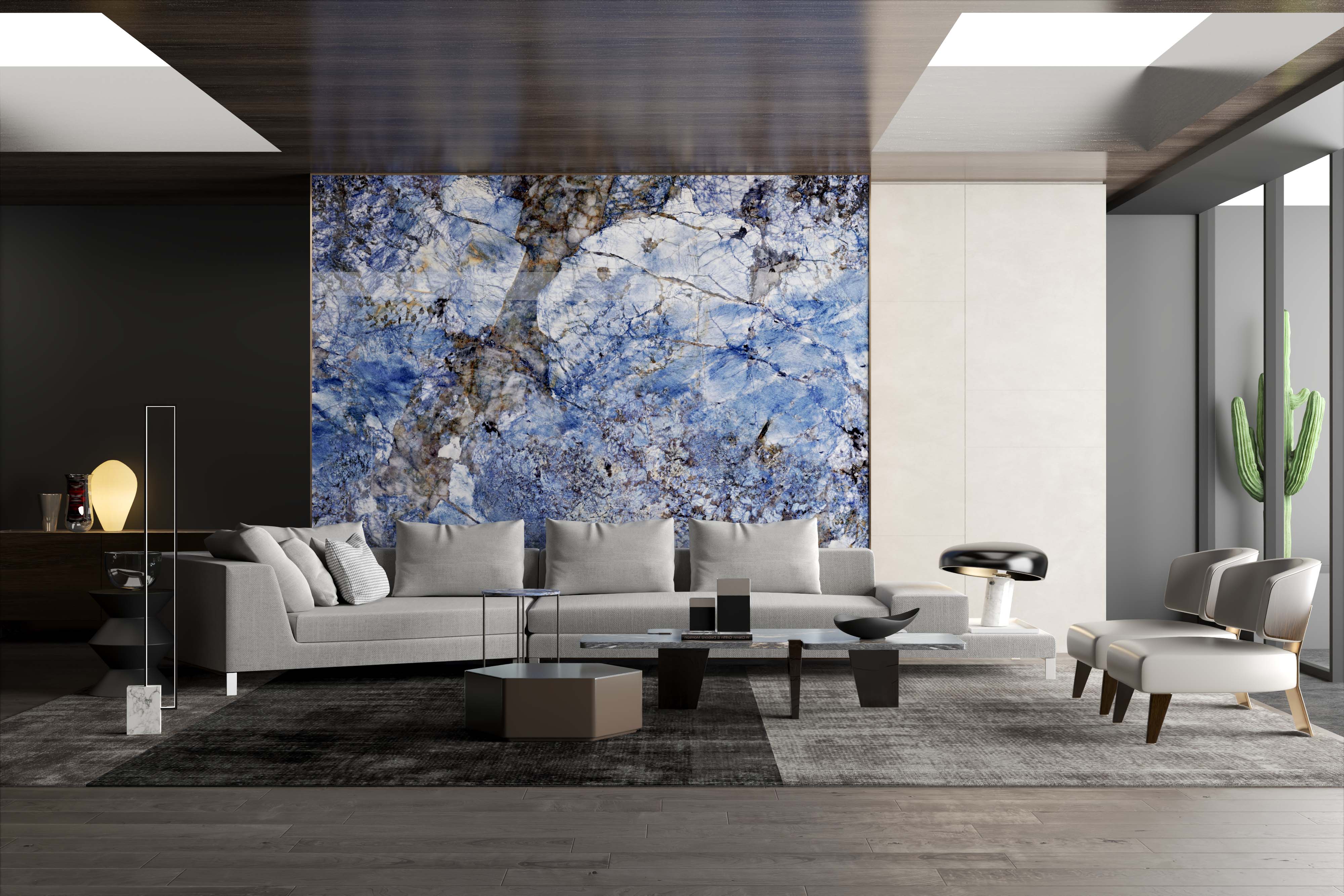
Wall finishes now have to do more than cover a surface. Homeowners, designers, and contractors often want the look of marble, wood, or metal without the slow installation, heavy materials, and constant upkeep that traditional finishes can bring.
Carbon Crystal Board answers that demand as a modern decorative wall material designed for feature walls, commercial interiors, humid spaces, and fast renovations. By understanding how a carbon crystal wall panel is built, where it performs well, and what to check before buying, readers can choose a wall finish that looks refined without creating avoidable installation or maintenance problems.
How Carbon Crystal Board Is Built and Why That Matters
The core, surface film, and protective layer
A Carbon Crystal Board is best understood from the surface inward. The visible layer provides the decorative effect, whether that means marble veining, brushed metal, wood grain, fabric texture, or a glossy finish. Beneath that surface, a composite substrate gives the panel its shape, thickness, and stability, while the protective layer helps the finished wall resist stains, scratches, moisture, and routine cleaning.
This layered structure matters because wall panels are judged by more than first impressions. A beautiful surface can still fail if the substrate bends, the coating peels, or the panel cannot stay flat after installation. For that reason, buyers should look at the whole board rather than focusing only on color or pattern.
KAXIER’s marble-pattern Carbon Crystal Board uses PVC resin powder and bamboo charcoal powder, while its PET metal panel uses a three-layer co-extruded substrate made with PVC and bamboo charcoal fiber, with PET decorative film laminated on the surface. These details show why the category is often discussed as both a decorative material and a composite panel system.
Decorative finishes readers actually compare
The strongest appeal of Carbon Crystal Board is visual range. Marble-effect panels are often chosen for TV background walls, lobbies, bathrooms, villas, and other areas where a large, dramatic surface can change the mood of the room quickly. Continuous marble patterns are especially useful when designers want fewer visual breaks than tile or smaller cladding pieces.
Metallic finishes serve a different design purpose. A brushed gold, stainless-steel, or mirror-like surface can make restaurants, hotel corridors, office reception areas, and retail interiors feel sharper and more contemporary. Since these panels create the impression of metal without using a heavy metal sheet as the main wall finish, they can offer a more manageable path to a high-end look.
Wood grain, fabric texture, leather-like surfaces, and soft matte designs make the material easier to use in residential spaces. These finishes can warm up bedrooms, apartments, and living rooms where high gloss or strong metallic effects might feel too intense. The right finish is less about what looks impressive in a sample box and more about what works under real lighting, with real furniture, across the full wall area.
Panel size, thickness, and format
Specifications shape the final result more than many buyers expect. Width and length affect how many seams will appear on the wall, how the pattern continues from one panel to the next, and how much material will be lost during cutting. Thickness influences handling, wall feel, impact resistance, and how forgiving the panel is when installed over a less-than-perfect substrate.
KAXIER’s marble-pattern Carbon Crystal Board comes in 1220 mm width, 5 mm or 8 mm thickness, and length options such as 2.44 m, 2.8 m, 3 m, or customized sizes. Its PET metal carbon crystal wall panel also comes in 1220 mm width, 2440 mm to 3000 mm length options, and 5 mm or 8 mm thickness. These sizes make the board suitable for large wall surfaces, but they also make layout planning important before cutting begins.
For decorative renovation, a thinner panel may be enough when the existing wall is flat and the space is not exposed to heavy impact. In commercial interiors, busy corridors, or feature walls where a more solid feel is expected, thicker formats may be preferred. The smart choice is not automatically the thickest board, but the format that matches the wall condition, design layout, budget, and installation method.
Where Carbon Crystal Board Works Best
Feature walls and high-visibility interiors
Carbon Crystal Board performs best where decoration carries real value. TV background walls, reception areas, hotel rooms, corridors, restaurant walls, retail displays, apartments, and villa interiors all benefit from a material that can cover a large surface quickly while creating a strong visual statement. A plain painted wall may feel unfinished in these spaces, while stone or tile may add cost, weight, and installation time.
Large-format panels are especially useful on walls meant to be seen from a distance. Fewer joints can make the surface look cleaner, and continuous patterns can help marble or metal finishes feel more intentional. When the panel layout is planned well, the wall can look composed rather than patched together.
Commercial projects also value speed. Hotels, restaurants, and stores often need interiors that can be refreshed with less disruption, because downtime has a direct cost. A carbon crystal wall panel can support faster decorative transformation when the substrate is suitable and the installer has planned the joints, trims, and edges before work begins.
Humid, busy, and easy-clean spaces
Moisture resistance is one of the reasons many buyers compare Carbon Crystal Board with tile, PVC panels, and WPC wall panels. Bathrooms, kitchens, commercial wash areas, office corridors, and retail walls all involve some combination of humidity, stains, fingerprints, or frequent contact. In these spaces, a smooth decorative surface that can be wiped clean offers a practical advantage over painted walls.
Still, moisture resistance should not be misunderstood as magic armor. The panel surface may resist water, but joints, corners, trims, adhesive contact, and the wall behind the board still need proper treatment. Poor sealing around edges can create weak points even when the panel itself has good moisture performance.
KAXIER’s PET metal panel is moisture-proof, stain-repellent, scrubbable, and easy to clean, with application examples including residential rooms, bathrooms, kitchens, offices, shopping malls, restaurants, and hotels. Those qualities make sense for busy interiors, provided the board is installed according to the project conditions rather than treated as a shortcut around basic wall preparation.
Carbon Crystal Board vs Traditional Wall Finishes
Compared with paint, tile, marble, and wood veneer
Carbon Crystal Board sits in the middle of several familiar wall-material choices. Compared with paint, it offers stronger texture, richer patterns, and a more finished appearance, especially for feature walls. Paint still wins on low upfront cost and easy touch-ups, but it cannot easily create a marble, metallic, or dimensional decorative effect without additional labor.
Against tile, the comparison becomes more about speed and visual style. Tile can be excellent in wet areas, but grout lines require maintenance and installation takes more time. A Carbon Crystal Board can create a larger, cleaner surface with fewer breaks, although wet-area performance still depends on seam sealing and correct installation.
Natural marble remains a premium material because every slab has depth, variation, and weighty authenticity. The trade-off is cost, handling difficulty, structural load, and installation complexity. A continuous marble-pattern Carbon Crystal Board can work as a lighter and more budget-friendly alternative for projects that want a marble-style wall without using full natural stone slabs.
Wood veneer brings warmth that many synthetic finishes try to imitate. In dry residential spaces, good veneer can look refined and natural, but moisture, scratches, termites, and maintenance may become concerns depending on location and use. Carbon Crystal Board can be more practical where a wood-like or fabric-like visual is desired without the same sensitivity to humidity and surface wear.
Compared with ordinary PVC and WPC wall panels
Not every decorative PVC-style panel should be treated as the same thing. Product names in this category can overlap, and buyers may see Carbon Crystal Board, bamboo charcoal board, PVC wall panel, and WPC wall panel used in similar sales contexts. The safer approach is to evaluate actual construction: substrate density, surface film, thickness, protective coating, edge behavior, fire rating, and installation accessories.
Ordinary PVC panels may be lighter and cheaper, but some can feel hollow, show waves, or lack the surface durability needed for higher-end interiors. WPC wall panels can work well for general cladding, yet their quality varies depending on the mix of materials, density, and finish. A carbon crystal wall panel should therefore be judged by its structure and performance evidence, not only by the label printed on a catalog.
The most useful comparison is not “Which material is best?” but “Which material fits this wall, this room, and this maintenance expectation?” A hotel lobby, a rental apartment bathroom, a retail display wall, and a private bedroom do not need the same solution. The table below offers a practical starting point.
A small sample rarely tells the whole truth. High-gloss marble can look crisp in a showroom, but on a full wall it may reflect ceiling lights, reveal uneven surfaces, or make pattern alignment more obvious. Before ordering, the finish should be checked under lighting similar to the final room.
Metallic PET finishes work best when the surrounding design supports them. In a hotel corridor, restaurant, reception desk area, or modern office, a brushed metal look can add polish without relying on heavy metal cladding. In a small bedroom with limited light, the same finish may feel too cold or visually busy.
Dark panels can create a premium atmosphere, but they also absorb light and may make compact rooms feel smaller. Wood grain, fabric texture, or softer neutral finishes are often safer for homes that need warmth and flexibility. The better question is not “Which design looks most expensive?” but “Which surface will still feel right after furniture, lighting, and daily use are added?”
Check technical details before buying
A good buying decision starts with questions that go beyond color. Thickness, density, surface film type, fire rating, environmental information, moisture-use guidance, color consistency, and matching trims should all be reviewed before a bulk order. Without these details, buyers risk choosing a panel that looks good in photos but performs poorly on site.
Safety documents deserve special attention in commercial spaces. Hotels, malls, restaurants, offices, schools, and public interiors may require specific fire-performance or emissions documentation. KAXIER’s PET metal panel includes B1 flame-retardant and E0 environmental protection information, and project buyers should verify whether the documents match the exact product being ordered.
Accessories can be just as important as the board. Matching trims, corner profiles, adhesives, joint solutions, and installation guides help the wall look complete. A premium panel installed with mismatched profiles can lose much of its design value.
Conclusion
Carbon Crystal Board is most useful when a project needs a decorative wall finish that can balance appearance, installation efficiency, moisture resistance, and daily maintenance. Its value comes from choosing the right surface, thickness, accessories, and installation method for the actual room rather than judging by pattern alone.
For designers, contractors, and property owners comparing modern wall materials, GUANGDONG KAXIER GREEN BUILDING MATERIALS CO., LTD. offers Carbon Crystal Board and related wall panel solutions that can help create cleaner feature walls, faster renovations, and easier-to-maintain interiors without relying on heavy traditional finishes.
FAQ
Q: What is Carbon Crystal Board?
A: Carbon Crystal Board is a decorative interior wall panel made with composite materials, often combining PVC-based substrates, bamboo charcoal fiber, calcium powder, and protective surface films.
Q: Is a carbon crystal wall panel waterproof?
A: Many carbon crystal wall panels are designed with moisture-resistant and easy-clean surfaces, but waterproof performance also depends on proper sealing, edge treatment, and installation quality.
Q: Where can Carbon Crystal Board be used?
A: Carbon Crystal Board is commonly used for feature walls, TV backgrounds, hotel interiors, offices, restaurants, kitchens, bathrooms, retail spaces, and renovation projects that need fast decorative upgrades.
Q: Is Carbon Crystal Board better than PVC wall panels?
A: It can offer a denser structure, stronger decorative surface, and better durability than some ordinary PVC panels, but quality depends on the core, coating, thickness, and accessories.
Q: How is Carbon Crystal Board installed?
A: Installation usually involves preparing a clean, flat wall, measuring and cutting panels, planning the layout, fixing panels, and finishing joints, corners, and edges carefully.
Q: How do you maintain Carbon Crystal Board?
A: Clean the surface with a soft cloth and mild detergent when needed. Avoid abrasive pads or strong solvents, especially on glossy, PET, or decorative film finishes.
The company was established in 2018 and specializes in new environmentally friendly indoor decorative materials such as SPC flooring, WPC flooring, carbon crystal flooring, wood veneer panels, and carbon crystal wall panels.