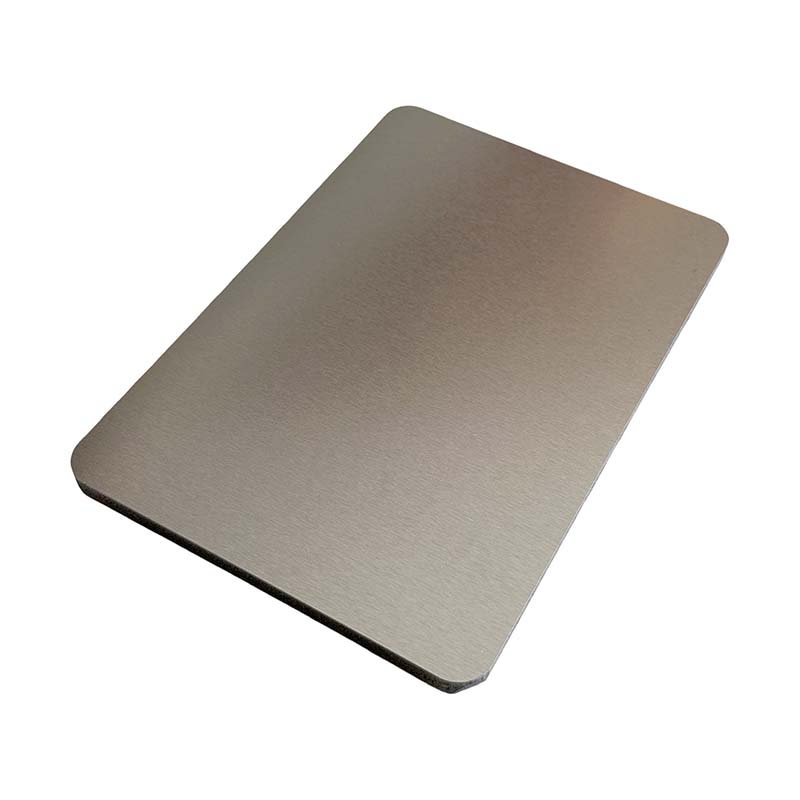
Interior design is evolving rapidly across commercial and residential sectors today. Many builders now favor modern composite materials over traditional drywall or solid timber. A beautifully finished Bamboo Charcoal Panel might look stunning in a corporate lobby. However, pure aesthetic appeal becomes completely irrelevant if these materials fail local building codes.
Specifying unverified composite panels routinely leads to disaster. You risk failed building inspections, costly teardowns, indoor air quality (IAQ) liabilities, and severe project delays. Toxic off-gassing and poor fire ratings pose massive threats to human life in enclosed spaces.
We must look far beyond the surface veneer. This article provides architects, contractors, and B2B buyers with a definitive, standard-based framework. You will learn exactly how to evaluate the safety, regulatory compliance, and actual chemical reality of bamboo charcoal paneling.
Key Takeaways
Formaldehyde Baseline: Commercial-grade panels must meet at least **E0** (European) or **CARB Phase 2 / EPA TSCA Title VI** (US) emission standards.
Fire Retardancy Code: High-traffic and commercial projects require **Class A (ASTM E84)** or **B-s1, d0 (EN 13501-1)** fire ratings.
Material Reality: No composite panel is entirely "chemical-free." Safe panels rely on non-toxic binders (like MDI resins) rather than traditional urea-formaldehyde glues.
Verification Rule: Never accept manufacturer claims without an active, verifiable third-party lab report (e.g., SGS, Intertek, TÜV).
The Business & Liability Risks of Non-Compliant Wall Panels
Commercial building codes exist primarily to protect human life. When you specify or install non-compliant wall panels, you face immediate regulatory bottlenecks. Fire marshals and local building inspectors actively scrutinize interior wall assemblies before granting approvals. Failing to provide proper testing documentation brings projects to a grinding halt. You cannot simply cover a wall and hope regulators look the other way. Without compliant material certificates, municipalities will routinely deny commercial occupancy permits. This denial forces project managers into extended timelines and highly stressful negotiations.
Beyond regulatory hurdles, buyers frequently fall into the "greenwashing" trap. Many procurement teams assume "bamboo" automatically means "eco-friendly" or "chemically safe." This assumption is a dangerous trap. The raw bamboo powder is indeed natural. However, the manufacturing process dictates the actual safety profile. Factories bind this natural powder using adhesives and extrude it alongside various polymer resins. If a supplier utilizes cheap, toxic resins or heavy-metal stabilizers during extrusion, the final product becomes hazardous. Real safety relies on the chemistry of the binders, not just the presence of bamboo fiber. You must demand proof of safety rather than trusting marketing buzzwords.
Formaldehyde Emission Standards: What Actually Qualifies as "Safe"?
Global Emission Frameworks to Look For
To evaluate safety properly, you must understand global formaldehyde emission frameworks. In European markets, the E0 and E1 standards dictate acceptable indoor limits. The E1 standard serves as the legal baseline for market entry. However, E0 is the commercial ideal. Panels achieving an E0 rating emit formaldehyde at or below 0.05 parts per million (ppm). This negligible level ensures pristine indoor air quality. We strongly recommend E0 certification for hospitals, schools, and high-end residential builds.
In North America, regulators enforce the CARB Phase 2 and EPA TSCA Title VI benchmarks. These are not optional guidelines. They represent mandatory federal and state laws for composite wood and bamboo products sold across the United States. CARB Phase 2 strictly limits emissions from core materials. Meeting EPA TSCA Title VI proves a manufacturer maintains rigorous quality control and continuous product testing. Always request these specific certificates when importing materials into North America.
Summary of Global Formaldehyde Limits
Standard Name
Region
Emission Threshold
Commercial Status
E1 Standard
Europe / Global
≤ 0.10 ppm
Legal Minimum requirement
E0 Standard
Europe / Global
≤ 0.05 ppm
Premium Commercial Ideal
CARB Phase 2
United States (California)
≤ 0.05 ppm (varies by core)
Mandatory for CA compliance
EPA TSCA Title VI
United States (Federal)
Matches CARB Phase 2
Mandatory Federal law
The Source of Emissions (Evaluating the Ingredients)
Formaldehyde rarely originates from the bamboo itself. Instead, we must break down the composition of a standard composite panel. These boards typically consist of bamboo powder, a PVC or resin matrix, and decorative adhesive films. The dangerous off-gassing almost exclusively originates from the adhesives used during lamination and core binding. Traditional manufacturers historically favored urea-formaldehyde glues because they are incredibly cheap. Unfortunately, these glues degrade over time and continuously release toxic gas into enclosed spaces.
Your primary evaluation criterion must focus on binder chemistry. Shortlist only those suppliers who transparently specify their ingredients. Safe manufacturers utilize polyurethane (PUR) hot-melt adhesives or MDI resins. These modern binders create strong chemical bonds without relying on formaldehyde donors. By switching from urea-formaldehyde to PUR adhesives, factories can successfully produce E0-rated panels. Always ask your supplier directly about their lamination glues before placing a bulk order.
Fire Resistance Ratings: Securing Code Compliance
Standardizing Fire Performance Metrics
Fire performance is arguably the most critical metric for commercial wall panels. In the United States, architects rely on the ASTM E84 standard. This tunnel test measures how fast flames travel across a material and how much smoke it generates. Commercial corridors and lobbies usually demand a Class A rating. To achieve Class A, a panel must score a Flame Spread Index (FSI) between 0 and 25. It must also maintain a Smoke Developed Index (SDI) below 450. These numbers ensure occupants have sufficient time to evacuate during an emergency.
European projects follow the EN 13501-1 standard. This framework provides a highly detailed classification system. The ideal rating for safe commercial panels is B-s1, d0. The "B" indicates the material is technically combustible but contributes very little to a growing fire. The "s1" designation means the panel produces minimal, non-toxic smoke. The "d0" guarantees the material produces no flaming droplets. Flaming droplets easily ignite secondary fires on carpets or furniture, making the "d0" rating absolutely vital for ceiling and wall applications.
Material Engineering for Fire Resilience
Achieving these strict fire ratings requires advanced material engineering. The inherent properties of carbonized bamboo powder contribute significantly to thermal stability. Through high-temperature carbonization, manufacturers remove volatile organic compounds from the raw bamboo. This treatment leaves behind a stable, carbon-rich powder. When exposed to heat, this carbonized structure resists rapid ignition much better than raw wood fiber.
However, basic carbonization is not enough for premium commercial spaces. Manufacturers employ sophisticated solution approaches for maximum safety. High-spec variants like the Gold Metal Carbon Crystal WPC Wall Panel utilize groundbreaking metal-carbon crystal co-extrusion technology. This process fundamentally alters the material's combustibility. By fusing metal crystals with the carbon matrix, the panel forms a dense thermal barrier when exposed to flame. This specialized engineering allows it to outperform standard HDF or basic WPC panels easily during rigorous ASTM E84 fire tests.
How to Vet Manufacturer Claims and Audit Lab Reports
Trusting a sales brochure is a recipe for disaster. Procurement teams must actively audit manufacturer claims. The market is saturated with falsified documents. You must learn how to spot fake certifications instantly. Genuine CE, FSC, and ISO certificates always feature traceable document numbers and clear expiration dates. Unscrupulous suppliers frequently Photoshop their company name onto another factory's report. If a certificate looks blurry, lacks a verifying QR code, or features misaligned text, treat it as fraudulent.
You must also watch out for the "batch test" assumption. Many suppliers rely on a single, outdated lab test conducted five years ago. They use this golden sample to sell thousands of subsequent, lower-quality batches. Manufacturing formulas change frequently to cut costs. Therefore, an old report proves nothing about the panels currently rolling off the production line. You must require recent, batch-specific testing from the last 12 to 18 months.
To verify safety, only accept reports from trusted third-party labs. Building inspectors globally recognize the following testing bodies:
SGS (Société Générale de Surveillance): The global benchmark for material inspection and chemical testing.
Intertek: Highly respected for North American fire and emission standards (ASTM and CARB).
TÜV Rheinland: A strict European authority for product safety and CE compliance.
UL (Underwriters Laboratories): The premier standard for fire resilience and electrical safety in the US.
If your supplier hands you a report from an unknown, local lab, reject it. You can always contact SGS or Intertek directly via their online portals to verify a certificate number's authenticity.
Implementation Realities: Protecting Ratings During Installation
Buying a compliant panel is only half the battle. Poor installation practices can destroy your environmental and fire ratings instantly. Site acclimation and indoor air quality management are crucial during the initial phase. Even premium E0-rated panels require proper off-gassing. We strongly advise running HVAC ventilation continuously during the first 72 hours post-installation. This protocol flushes out temporary volatile compounds released from construction dust and packaging materials.
Contractors must also address cutting and dust risks on site. Finished panels may possess a Class A fire rating. However, the fine bamboo-charcoal dust generated during site cutting behaves very differently. This airborne dust is highly combustible. It also presents a severe inhalation hazard for workers. Prescribe strict site protocols. Workers must use tools equipped with HEPA vacuums. They should cut panels outside whenever possible and always wear N95 respirators.
Finally, carefully monitor adhesive compatibility. This is where many projects fail. A builder might purchase a zero-emission panel but then mount it using cheap, high-VOC construction adhesives. Using toxic liquid nails will immediately nullify the eco-benefits of a low-emission board. The wall assembly will fail post-installation air quality tests due to the glue, not the panel. Specify low-VOC, solvent-free adhesives in your construction documents to protect the assembly's integrity.
Conclusion
Specifying bamboo charcoal panels requires a disciplined, evidence-based approach. You must move beyond visual aesthetics and demand rigid adherence to global standards. Commercial viability depends entirely on E0 or CARB Phase 2 formaldehyde limits and Class A or B-s1,d0 fire ratings. Without these verified metrics, you expose your firm to immense liability, failed inspections, and toxic indoor environments.
Your actionable next step is immediate implementation. Procurement teams should create a mandatory compliance checklist today. Require explicit, third-party fire and formaldehyde lab reports from SGS or Intertek before you ever request a physical panel sample. By enforcing this strict vetting process, you guarantee beautiful, legally compliant, and permanently safe commercial interiors.
FAQ
Q: Are bamboo charcoal panels 100% formaldehyde-free?
A: Chemically, raw wood and bamboo contain trace amounts of natural formaldehyde. Commercially, a "zero emission" label typically means the product tests below detectable thresholds. E0-rated panels achieve this near-zero state because factories utilize premium, non-toxic binders like PUR or MDI resins instead of traditional urea-formaldehyde glues.
Q: Does a fire-retardant bamboo charcoal panel mean it is fireproof?
A: No. Claiming any composite wood panel is completely "fireproof" is an exaggeration. Class A fire-retardant panels will eventually burn under extreme heat. However, they are engineered to slow flame spread significantly and minimize toxic smoke production. This crucial delay provides occupants vital time for safe evacuation.
Q: Can I use standard WPC panels instead of bamboo charcoal for the same fire rating?
A: Not inherently. Standard WPC features different polymer ratios that often melt or ignite quickly. Specific composite formulas, like the Gold Metal Carbon Crystal variant, are engineered explicitly to pass stricter commercial fire codes. Always check the specific ASTM E84 test results rather than assuming all WPC performs equally.
The company was established in 2018 and specializes in new environmentally friendly indoor decorative materials such as SPC flooring, WPC flooring, carbon crystal flooring, wood veneer panels, and carbon crystal wall panels.