Sustainability has become an important consideration in modern construction. Builders, designers, and homeowners increasingly want materials that provide durability, attractive design, and practical performance while reducing unnecessary maintenance and replacement.
WPC (Wood Plastic Composite) wall panels meet many of these requirements. They combine wood fiber, plastic, and selected additives to create a stable decorative material suitable for modern interiors. Although Kaxier’s WPC panels are not manufactured from recycled raw materials, they can still support sustainable construction through long service life, efficient installation, low maintenance, and reduced material replacement.
WPC wall panels can be used for walls, ceilings, partitions, columns, and decorative features in homes, offices, schools, restaurants, shopping malls, hotels, and other commercial spaces.
Understanding WPC Wall Panels
WPC wall panels are engineered from wood fiber, plastic, and functional additives. This composition creates a decorative panel with the appearance of natural wood and greater resistance to moisture, mildew, insects, scratches, and everyday wear.
Unlike natural wood, WPC panels are less likely to absorb moisture, warp, or decay in humid indoor environments. Their stable structure helps them retain their appearance and reduces the need for frequent repair.
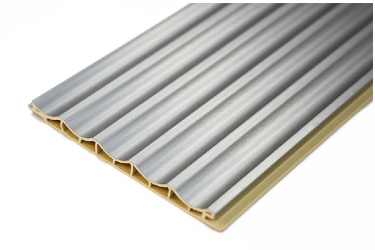
Kaxier offers WPC panels in various colors, dimensions, patterns, and surface finishes. Available designs include fluted profiles, wood-grain finishes, marble textures, and smooth decorative surfaces. This variety enables designers to create different interior styles without relying entirely on solid timber or natural stone.
Longer Service Life Reduces Material Waste
Durability is one of the most practical environmental advantages of WPC wall panels. Materials that remain functional for longer do not need to be removed and replaced as frequently.
Natural wood panels may swell, crack, warp, or decay when exposed to humidity. Painted walls may require regular repairs or repainting. Properly installed WPC panels provide a stable decorative surface that can maintain its appearance with relatively little maintenance.
A longer service life reduces the future demand for replacement panels, packaging, transportation, adhesives, and installation work. This is particularly useful in hotels, restaurants, offices, and retail spaces, where interior surfaces experience frequent contact and cleaning.
WPC panels are not impact-free materials, but their durability can reduce the environmental burden associated with repeated renovation.
Moisture Resistance
Moisture is a common cause of interior wall damage. When wall materials absorb water, they may swell, separate, develop mildew, or lose their original appearance.
Kaxier WPC panels have low moisture absorption and are designed to remain stable in humid indoor conditions. This makes them suitable for spaces where traditional wood finishes may require additional protection.
Moisture resistance helps extend the service life of the wall system and reduces premature disposal caused by warping or surface deterioration. However, WPC panels should not be used to conceal leaks, serious dampness, or structural moisture problems. The wall must be dry, stable, and properly prepared before installation.
Reduced Dependence on Solid Decorative Wood
WPC wall panels contain wood fiber rather than being made entirely from solid timber. This engineered composition allows manufacturers to create wood-look surfaces while using less solid wood than traditional timber wall cladding.
Wood-grain finishes can reproduce the warmth and texture of natural wood across large interior areas. This provides designers with an alternative when a project needs the appearance of timber but not the structural properties of solid lumber.
WPC should not be described as completely preventing deforestation, especially when the raw materials are not recycled. Its overall environmental impact depends on material sourcing, production, transportation, installation, service life, and disposal. Nevertheless, engineered decorative panels can reduce dependence on solid wood for non-structural interior decoration.
Low Maintenance Requirements
WPC panels generally require less maintenance than painted surfaces or natural wood cladding. Kaxier’s fluted wall panels feature a laminated surface designed to resist scratches and simplify everyday cleaning.
Routine care normally involves wiping the panels with a soft cloth and clean water. A compatible mild detergent may be used when necessary. Unlike natural wood, WPC panels do not usually require repeated sanding, painting, staining, polishing, or sealing.
Lower maintenance reduces the use of paints, varnishes, wood preservatives, and other surface-treatment products over the life of the installation. It also saves the labor and materials associated with frequent refinishing.
Less On-Site Surface Treatment
Natural wood often requires coatings to achieve the desired color and improve resistance to moisture, insects, and scratches. These coatings may need to be reapplied as the surface ages.
WPC panels are supplied with finished decorative surfaces. Their patterns, colors, and textures are created during production, so extensive on-site finishing is generally unnecessary. This simplifies construction and reduces the number of coating products required at the installation site.
Kaxier identifies its WPC fluted panels as formaldehyde-free. Buyers should still request current product specifications and relevant test documents to ensure that the chosen panel meets local indoor-material and building requirements.
Efficient Installation
Installation efficiency also contributes to sustainable construction. Complicated wall systems may require several wet trades, repeated surface preparation, long drying periods, and extensive cleanup.
Kaxier WPC fluted wall panels can be installed with suitable structural adhesive and mechanical fasteners according to the installation instructions. Their prefabricated surfaces eliminate several steps associated with plastering, sanding, painting, or staining.
Efficient installation can provide several benefits:
Less on-site finishing
Reduced dust and construction waste
Shorter installation time
Less disruption in occupied buildings
Faster completion of renovation projects
Lower demand for wet construction processes
Accurate measurement and layout remain important. Careful planning allows installers to optimize panel placement, reduce offcuts, and avoid unnecessary material waste.
Supporting Interior Renovation
Renovating an existing building can require fewer resources than demolishing it and constructing a completely new space. Decorative wall panels can help update an interior without major structural changes.
WPC panels can create feature walls, cover suitable existing surfaces, decorate ceilings and columns, or divide interior spaces. Their finished surfaces can shorten renovation schedules and reduce the amount of wet work required.
This is especially useful for hotels, offices, shops, and restaurants that need to minimize business disruption. Nevertheless, the existing surface must be level, stable, clean, and dry. Any mold, water leakage, or structural damage should be repaired before the panels are installed.
Design Versatility
Kaxier WPC wall panels are available in different colors, textures, and patterns, including wood-look, fluted, marble-style, and smooth finishes. This versatility allows architects and designers to create a wide range of interior styles using one practical wall system.
Common applications include:
Living-room and bedroom feature walls
Office reception areas
Restaurant and hotel interiors
Schools and cinemas
Shopping malls and retail stores
Ceilings and decorative partitions
Columns and corridors
The availability of wood-look and marble-style surfaces helps designers achieve the desired appearance without using solid timber or natural stone for every decorative area.
Durability in High-Traffic Spaces
Commercial interiors experience frequent contact, cleaning, and everyday wear. Materials that scratch or deteriorate easily may require repeated repairs, increasing cost and material consumption.
Kaxier WPC fluted panels use a laminated surface intended to provide scratch resistance and convenient cleaning. This makes them a practical choice for offices, restaurants, malls, cinemas, schools, and other busy interiors.
No wall panel is completely damage-proof. Sharp impacts, excessive force, and unsuitable cleaning products should still be avoided. Selecting a surface suitable for the expected traffic level helps extend the life of the installation.
Fire-Performance Considerations
Fire performance is an important factor when selecting interior wall materials. Kaxier states that its WPC fluted wall panels offer flame-retardant performance up to B1.
However, “flame retardant” does not mean “fireproof.” Fire classifications and approval requirements differ by country, building type, and application. Buyers should request current test reports and confirm compliance with local building codes before specifying the panels.
WPC wall panels should always be used as part of a complete building fire-safety strategy.
How to Choose WPC Wall Panels
Not every WPC panel has the same composition, surface quality, or performance. Buyers should consider the complete product specification instead of relying only on general environmental claims.
Important selection factors include:
Material composition: Confirm that the panel meets the project’s material requirements.
Application: Determine whether it is suitable for walls, ceilings, partitions, or other interior surfaces.
Moisture performance: Choose a panel appropriate for the expected humidity level.
Fire rating: Request test documentation and confirm local compliance.
Panel dimensions: Plan the layout carefully to reduce cutting and waste.
Surface durability: Select a finish suitable for traffic and cleaning frequency.
Installation method: Use compatible adhesives, fasteners, trims, and accessories.
Supplier support: Confirm available specifications, samples, colors, and installation guidance.
Kaxier supplies WPC wall panels in multiple styles for residential, commercial, and hospitality interiors. Selecting the correct product for the actual environment is essential for long-term performance.
Cost and Long-Term Value
The initial cost of WPC wall panels may differ from paint, natural wood, low-grade PVC panels, or other decorative materials. A proper comparison should consider more than the purchase price.
Installation time, surface finishing, cleaning, maintenance, service life, and replacement frequency all influence long-term value. A durable panel requiring little refinishing may be more economical than a cheaper material that needs frequent repair or replacement.
For commercial projects, faster installation can also reduce disruption and help the property return to operation sooner.
Conclusion
WPC wall panels can support sustainable construction through durability, moisture resistance, low maintenance, efficient installation, and reduced replacement requirements. These benefits do not depend on claiming that the panels contain recycled raw materials.
Kaxier WPC panels are manufactured from wood fiber, plastic, and selected additives. Their main environmental advantages come from stable performance, long-term use, minimal on-site finishing, and the ability to renovate interiors without major structural work.
For homes, offices, restaurants, hotels, schools, shopping malls, and other indoor spaces, WPC panels provide a practical combination of design flexibility and reliable performance. When properly selected, installed, and maintained, they can create attractive interiors while reducing unnecessary maintenance and repeated material replacement.


