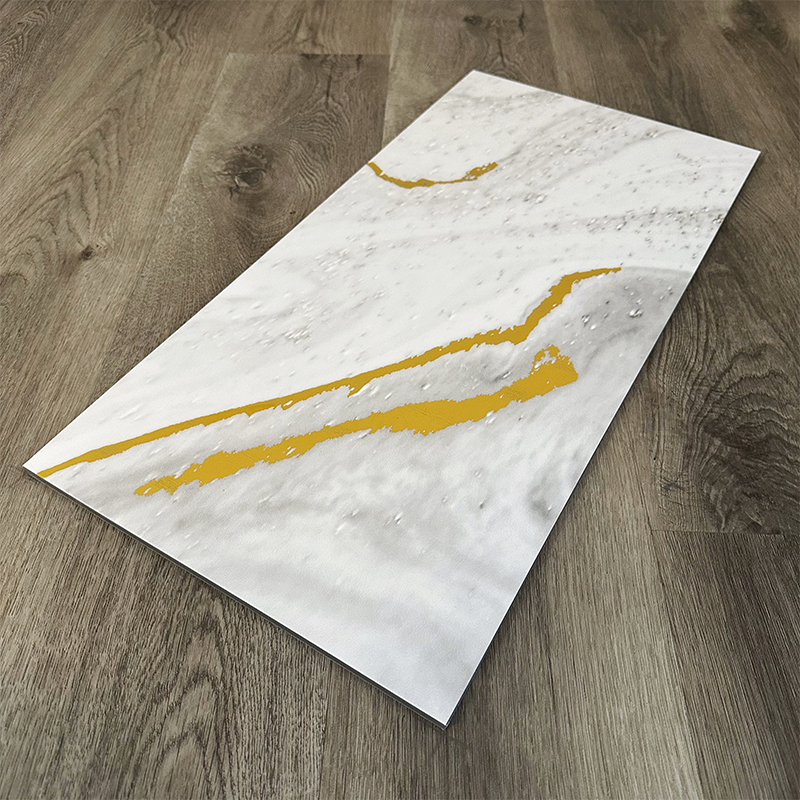
Commercial and high-end residential interior projects increasingly demand rapid-deployment cladding solutions. Modern construction schedules leave little room for delays. Time dictates profitability. You need materials looking exceptional while installing rapidly. Enter the carbon crystal wall panel. It serves as a highly efficient composite alternative. It replaces traditional drywall, solid wood, and standard PVC effectively.
We created this guide for architects, contractors, and project managers. It provides a realistic, evidence-based framework. You can use it to evaluate material specifications accurately. We also cover essential installation requirements and potential procurement risks. Traditional finishes often disrupt site operations. They create excessive dust and require lengthy curing times. By the end of this guide, you will understand how to integrate these advanced composite panels seamlessly. You can avoid common pitfalls and ensure a flawless finish for your next interior build.
Key Takeaways
Material Composition: Carbon crystal panels utilize a bamboo charcoal core combined with a crystalline surface layer, offering higher dimensional stability than standard PVC or MDF.
Finish Versatility: Advanced laminations, such as the PET Gilded Marble Bamboo Charcoal Panel, provide high-fidelity aesthetic replication with superior scratch and moisture resistance.
Installation Efficiencies: While praised for rapid installation over existing substrates, long-term performance heavily relies on strict wall-flatness tolerances and correct adhesive selection.
Evaluating Carbon Crystal Wall Panels Against Traditional Materials
Let us explore the core business problem facing modern construction. Interior projects face frequent timeline delays. Budget overruns happen often due to multi-step wall finishing. Mudding, taping, and painting take days to cure properly. Furthermore, high material costs for solid wood or real stone drain project budgets quickly. We need smarter, faster alternatives.
Solid Wood & Veneer vs. Carbon Crystal
Wood requires careful acclimatization before installation. It warps easily when ambient moisture fluctuates. Real wood also fades under direct sunlight. Conversely, a Carbon Crystal Wall Panel is highly hydrophobic. It remains dimensionally stable across different regional climates. Wood also poses significant supply chain variability. Finding matching grain patterns across large batches is notoriously difficult. Composite panels solve this issue completely. They offer consistent batch-to-batch matching. You get exactly what you specify every time.
Natural Stone vs. Carbon Crystal
Stone demands heavy mechanical fastening. You must account for massive structural loads during the engineering phase. Heavy lifting equipment is often required on site. Installers must use specialized wet saws to cut stone slabs. Carbon crystal panels are lightweight. You can apply them directly to non-load-bearing walls. Installers cut them using standard woodworking tools. This saves significant engineering time and manual labor effort.
Transparent Limitation
You must understand material limits clearly. Carbon crystal is strictly a decorative cladding. It is not a structural element. You cannot use it to bear heavy lateral loads. It requires underlying timber or metal blocking. You need this blocking for mounting heavy fixtures. Do not mount televisions or heavy shelving directly to the panel surface.
Traditional Materials Comparison
Material Category
Moisture Resistance
Weight Profile
Installation Speed
Solid Wood
Low (Prone to warping)
Medium
Slow (Requires acclimation)
Natural Stone
High
Heavy (Requires structural anchors)
Very Slow (Requires wet cutting)
Carbon Crystal Board
High (Hydrophobic)
Lightweight
Fast (Direct adhesion)
Core Finish Types and Material Specifications
Let us break down the anatomy of the panel. The manufacturing relies on a multi-layer extrusion process. First, you have the bamboo charcoal substrate forming the core. Next comes a PUR hot-melt adhesive layer. Above this sits the decorative film layer. Finally, a protective wear layer seals the panel.
Anatomy Breakdown
Understanding these layers helps you specify the right product. We break down the four primary layers below.
PUR Hot-Melt Adhesive: Ensures a permanent, moisture-proof bond between the core and the film.
Decorative Film Layer: Carries the high-resolution printed texture or color.
Protective Wear Layer: Defends against scratches, UV fading, and daily abrasion.
Finish Category 1: PET Gilded Marble
You might consider the PET Gilded Marble Bamboo Charcoal Panel for luxury spaces. PET (Polyethylene Terephthalate) film offers distinct advantages over standard PVC films. It delivers much higher UV resistance. You will not see plasticizer migration over time. Plasticizer migration makes surfaces sticky or brittle. PET prevents this entirely. It also boasts better environmental compliance. The gilded marble aesthetic suits luxury commercial applications perfectly. You can design stunning hotel lobbies. Office feature walls also benefit from this look. You achieve high-end aesthetics without the premium stone price tag.
Residential and hospitality applications often require softer aesthetics. Woodgrain and solid matte finishes excel here. They offer excellent light-absorption qualities. Tactile textures mimic real wood grains beautifully. They create warm, inviting environments. Designers often use these finishes for bedroom headboard walls or restaurant dining areas.
Compliance & Safety Specs
Always check baseline metrics before specifying materials. Safety must remain your top priority.
Ensure panels meet Class A or Class B fire ratings depending on building codes.
Look for zero-formaldehyde emission certifications.
Verify testing standards like E0 or ENF.
Request independent laboratory testing reports for indoor air quality validation.
These baseline metrics guarantee safe, compliant indoor environments for building occupants.
Implementation Realities and Installation Prerequisites
Successful deployment hinges on proper preparation. You cannot skip these crucial steps. Rushing the installation always leads to poor aesthetic outcomes.
Substrate Assessment
You can install panels over existing tile or drywall. However, substrate preparation remains critical. The underlying wall must meet strict flatness tolerances. Measure the wall using a 2-meter straight edge. We recommend a variance of less than 3mm over this 2-meter span. Failing this requirement causes noticeable joint lippage. Uneven walls create shadow lines. These shadows ruin the seamless aesthetic you want to achieve.
Installation Methodologies (SOPs)
Follow standard operating procedures for the best results. We recommend these proven techniques for interior projects:
Direct Adhesion: Apply structural silicone in a grid pattern on the panel back. Use double-sided foam tape alongside the silicone. The tape provides immediate tack. It holds the panel firmly while the silicone cures fully over 24 hours.
Mechanical Fastening: Use concealed metal clips for secure mounting. Fasten the clips directly to wall studs or furring strips.
Corner Wrapping: Employ V-groove folding techniques on the panel back. This allows you to fold the panel. You achieve seamless 90-degree outer corners without using external trim pieces.
Common Adoption Risks
Many installers skip the acclimatization phase. They assume composite materials do not move. We strongly recommend 24-48 hours of on-site acclimatization. Do this despite the material's inherent moisture resistance. It allows the core to adjust to the room's ambient temperature.
Another severe risk is poor adhesive selection. Standard construction adhesives often fail in high-humidity zones like bathrooms. This failure leads to costly delamination. The panel pulls away from the wall. Always specify wet-area-rated structural silicones for bathroom applications. You must seal all edges to prevent moisture ingress behind the cladding.
Cost Analysis and Project Scalability
Let us examine the financial modeling for interior projects. Understanding the balance between material costs and labor time is essential for accurate budgeting.
Material vs. Labor Ratios
Premium composite cladding materials carry higher upfront costs than basic drywall. However, you mitigate this premium quickly. You eliminate wet trades entirely. You do not need plasterers on site. You do not need painters on site. The labor savings often balance the initial material premium perfectly. Installation happens in a fraction of the time. You turn spaces over to the client much faster.
Scalability in Commercial Rollouts
Standardized sizing drives scalability for large projects. Panels typically measure 1220mm x 2800mm or 1220mm x 3000mm. This sizing allows for seamless floor-to-ceiling installation in most modern builds. You eliminate horizontal seams entirely. Renovations finish faster. Consider a hotel renovation scenario. A room requiring traditional drywall and paint might stay out of order for four days. Using carbon crystal panels, you can finish the walls in one day. Hotel rooms or retail spaces can open immediately. Zero VOC off-gassing ensures instant, safe occupancy.
Lifecycle Durability
Consider long-term wear and tear in commercial spaces. These panels provide excellent impact resistance. They perform exceptionally well in high-traffic corridors. Baggage carts and cleaning equipment frequently bump walls. If damage occurs, repairing the system remains simple. You can remove and replace an individual panel quickly. This modular approach is far easier than patching, sanding, and repainting a damaged drywall section. Maintenance teams appreciate this simplicity.
Shortlisting Logic and Manufacturer Vetting
Finding the right supplier requires rigorous diligence. Do not rely on marketing brochures alone. You must dig deeper into the manufacturing capabilities.
Factory Verification
You must distinguish between genuine manufacturers and trading companies. Trading companies often mark up prices and lack quality control oversight. Ask for extrusion line capacity details. Request recent photos or videos of their PUR lamination equipment. True manufacturers will readily provide this proof. Trading companies often hesitate. They usually provide generic factory images pulled from the internet.
Quality Control Indicators
Request physical samples before ordering bulk shipments. You must perform field tests on these samples.
Inspect the edges carefully. Check the core density under a magnifying glass.
Identify excess filler. Porous or flaky cores indicate excess calcium carbonate filler. This means weak structural integrity.
Evaluate the peel strength. Try to peel the decorative film away from the core manually using a utility knife.
Verify the adhesive bond. A high-quality PUR bond will resist peeling entirely. The film should tear before it separates from the core cleanly.
Logistics and Procurement
Understand supplier constraints before finalizing your designs. Custom film finishes usually require standard Minimum Order Quantities (MOQs). These MOQs can sometimes exceed your project requirements. In-stock colors might offer lower MOQs. They provide excellent flexibility for smaller boutique jobs.
Shipping poses another substantial risk. Demand explicit details on edge-protection packaging. International or long-haul domestic freight can cause severe corner crushing. Robust packaging prevents material loss. Require your supplier to use wooden crates. They must also install heavy-duty edge guards on all pallets.
Conclusion
Carbon crystal panels bridge a crucial gap in interior design. They combine high-end aesthetics with rapid, predictable project delivery. You get the striking beauty of stone or wood. You avoid the lengthy installation times. You also escape the continuous maintenance headaches associated with natural materials.
Successful deployment relies on two critical factors. First, you need rigorous substrate preparation. Flat walls ensure a flawless, seamless finish. Second, you must vet your suppliers carefully. Look for high-quality PET films and authentic PUR laminations. Do not buy strictly on the lowest price.
Take action today. Request physical samples from your shortlisted suppliers. Review their localized fire-test reports carefully. Always conduct a small mockup installation before you commit to full-scale procurement. This testing phase guarantees your final project meets all expectations.
FAQ
Q: Are carbon crystal wall panels truly waterproof?
A: The panels themselves are highly moisture-resistant. They will not swell or degrade when exposed to water. However, the seams and joints remain vulnerable. You must properly seal these joints with appropriate wet-area silicone. This prevents water ingress behind the panel, which could damage the underlying wall structure.
Q: Can PET Gilded Marble Bamboo Charcoal Panels be bent for curved walls?
A: Depending on the core thickness and factory grooving, they can achieve specific radii. However, standard rigid panels will snap if forced into tight curves. You need specialized flexible panels for these applications. Alternatively, installers can use deep back-kerfing techniques to wrap tight curves safely.
Q: What is the standard lifespan of a carbon crystal wall panel in a commercial setting?
A: They typically last 15 to 20 years under normal interior conditions. This lifespan heavily depends on the quality of the protective wear layer. It also depends on the panel's resistance to direct, prolonged UV exposure. High-quality PET laminations generally extend this lifespan significantly.
Q: Do these panels require specialized tools to cut?
A: No, they do not. You can cut them easily with standard woodworking tools. Installers frequently use track saws or miter saws. We highly recommend using a high-tooth-count fine blade. This specific blade type prevents chipping or tearing the delicate decorative film during the cut.
The company was established in 2018 and specializes in new environmentally friendly indoor decorative materials such as SPC flooring, WPC flooring, carbon crystal flooring, wood veneer panels, and carbon crystal wall panels.