Choosing between a Carbon Crystal Board and a PVC wall panel often starts with a simple concern: which one will still look good after cutting, installation, cleaning, and everyday use? Both materials can create a neat decorative wall, but they differ in structure, surface feel, durability, and project cost. For buyers planning feature walls, commercial interiors, or budget renovations, the better choice is not always the cheaper or glossier option. A closer comparison helps clarify when a carbon crystal wall panel is worth considering and when PVC is enough.
The Main Difference Comes From Structure, Not Just Appearance
Carbon crystal board usually has a denser decorative substrate
The main difference between a Carbon Crystal Board and a PVC wall panel starts inside the board, not on the printed face. A carbon crystal board is generally positioned as a denser decorative panel with a more rigid substrate, so it often feels more stable when used across larger wall areas. That denser body can help the panel sit flatter, carry a premium surface film more convincingly, and reduce the flimsy feel that buyers sometimes associate with thin plastic panels. For feature walls, commercial interiors, and cabinet-facing applications, this sense of body matters because the panel is not merely covering a wall; it is becoming part of the room’s visual architecture.
Some carbon crystal wall panel products combine base materials, decorative films, and performance additives to balance appearance with practical use. Kaxier’s marble-pattern product uses PVC, calcium powder, and additives, while its mirror bamboo-charcoal wall board uses PVC resin powder, PET film, and bamboo charcoal fiber. These details are useful because they remind buyers to look past the category name. Two panels may both be sold for interior decoration, but their core composition, density, surface layer, and backing system can create very different results.
PVC wall panels are usually lighter and more budget-driven
PVC wall panels are usually chosen for simpler reasons: they are lightweight, relatively affordable, easy to transport, and practical for fast interior renovation. This does not make them a poor choice. In rental homes, utility rooms, temporary commercial spaces, corridors, and budget renovations, a PVC wall panel can provide clean wall coverage without the cost or labor expectations of a more premium decorative board. The material is also familiar to many installers, which can make sourcing trims, adhesives, and basic accessories easier.
The caution is that PVC wall panels vary widely. A thick, well-made PVC panel with a stable locking system may perform much better than a thin, hollow, bargain-grade panel. Surface film, panel profile, thickness, and edge design all affect how the finished wall looks after installation. Buyers who compare only product photos may miss these differences, and that is where disappointment usually sneaks in wearing work boots.
Surface Finish and Interior Effect: Which One Looks Better on the Wall?
Carbon crystal board is stronger for feature walls and premium surfaces
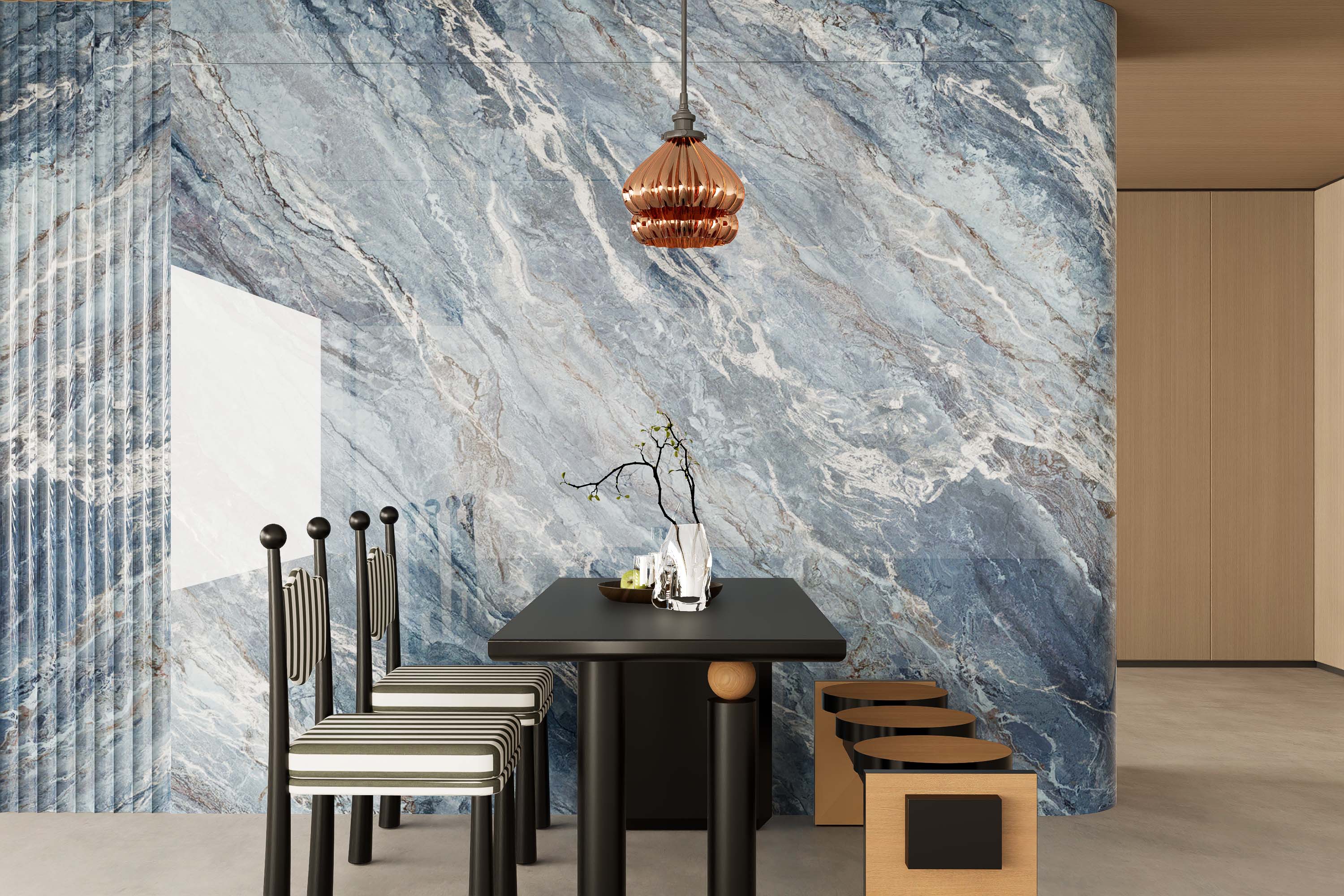
A Carbon Crystal Board usually has the advantage when the wall is meant to be noticed. TV background walls, hotel reception areas, showrooms, commercial lobbies, wardrobes, furniture panels, and decorative cabinets all place pressure on the surface finish. In these settings, the panel must deliver more than coverage; it needs depth, consistency, reflectivity, and a polished look across a broad surface. Marble patterns, mirror effects, metallic tones, and continuous textures can make a wall feel designed rather than merely clad.
Kaxier’s continuous marble pattern board fits naturally into this type of application. Its continuous texture, clear marble detail, edge-folding possibilities, and wide color range are relevant when a buyer wants a large background wall to look intentional rather than patched together. A carbon crystal wall panel with a high-gloss or mirror surface can also add brightness to interiors, especially in retail displays, cosmetic areas, or compact spaces where reflection helps expand the visual field.
PVC wall panels are more suitable for simple coverage
PVC wall panels can still look clean and modern, especially in simple colors or modest patterns. Their strength lies in practical coverage rather than visual drama. A corridor, laundry area, rental unit, back room, or temporary retail refresh may not need the richer surface body of a Carbon Crystal Board. In these projects, “good enough” is not an insult; it is a sensible budget decision.
The visual gap becomes clearer on large, high-visibility walls. Thin PVC panels may show more seams, flex, or surface flatness issues, particularly when lighting runs across the wall from the side. Decorative prints can also feel less substantial if the panel body is too light or the surface film lacks depth. When the design goal is a marble-look wall, a mirror statement surface, or a premium commercial backdrop, the stronger decorative presence of carbon crystal board often has the upper hand.
Visual module: finish comparison table
Surface expectation
Carbon crystal board
PVC wall panel
Better choice
Marble-look feature wall
Better depth, stronger panel feel, more suitable for continuous patterns
Can work, but may look flatter on large walls
Carbon crystal board
Mirror or high-gloss effect
More suitable when paired with stable backing and protective surface film
Available in some products, but quality varies heavily
Carbon crystal board
Simple white wall coverage
May be more than the project needs
Practical, clean, and budget-friendly
PVC wall panel
Large commercial background wall
Better for presentation-focused interiors
Works for basic coverage, less ideal for premium display
Carbon crystal board
Low-cost decorative refresh
Attractive but may raise total cost
Usually easier to justify on tight budgets
PVC wall panel
Best Uses: When to Choose Carbon Crystal Board or PVC Wall Panel
Choose carbon crystal board for visible, design-led interiors
Choose Carbon Crystal Board when the wall has to carry the room’s design weight. TV background walls, hotel and showroom interiors, reception areas, wardrobes, decorative cabinets, cosmetic display spaces, and mirror or marble-style statement surfaces all benefit from stronger visual consistency. In these projects, the wall is not a background extra; it is one of the main actors. A more rigid panel with a refined surface can make the finished space feel cleaner, brighter, and more deliberate.
This choice is especially sensible when buyers value surface depth, pattern continuity, rigidity, and longer service expectations over the lowest possible material cost. A carbon crystal wall panel can also suit B2B projects where repeatable finish, sample approval, and batch control matter. The best results come from matching the board to the site, not forcing it into every room. Premium panels deserve premium planning.
Choose PVC wall panel for practical, low-cost wall coverage
Choose PVC wall panels when the project needs fast, practical coverage without a luxury finish requirement. Budget renovations, rental interiors, utility rooms, temporary commercial decoration, simple corridors, and back-of-house spaces are natural fits. A PVC panel can refresh a wall quickly, protect the surface, and keep labor manageable. When the design brief is modest, this material can do its job without puffing up the budget.
PVC is not automatically inferior. It simply answers a different question. If the buyer asks, “How can I cover this wall cleanly and affordably?” PVC often makes sense. If the buyer asks, “How can this wall become a premium visual feature?” a Carbon Crystal Board is usually the stronger candidate.
Visual module: “Which panel fits your project?” decision table
Project priority
Better option
Why it fits
What to check before ordering
Premium feature wall
Carbon crystal board
Stronger decorative surface and better visual presence
Samples, density, surface film, total installed cost
Conclusion
Carbon Crystal Board and PVC wall panels serve different project needs. Carbon crystal wall panel options are better suited to visible spaces where surface depth, rigidity, and long-term appearance matter, while PVC panels remain practical for simple coverage and budget-focused renovation. The right decision depends on wall conditions, design expectations, moisture exposure, installation method, and total project cost.
GUANGDONG KAXIER GREEN BUILDING MATERIALS CO., LTD. offers decorative wall panel materials that help buyers match finish, thickness, and application more carefully, reducing selection mistakes and supporting cleaner, more efficient interior projects.
FAQ
Q: What is the main difference between Carbon Crystal Board and PVC wall panel?
A: Carbon Crystal Board usually has a denser structure and stronger decorative surface, while PVC wall panels are lighter and more budget-focused for basic interior coverage.
Q: Is a carbon crystal wall panel better than PVC for feature walls?
A: A carbon crystal wall panel is often better for feature walls because it offers stronger rigidity, surface depth, and a more premium visual effect on large areas.
Q: Are PVC wall panels still a good option?
A: Yes. PVC wall panels work well for low-cost renovations, utility rooms, rental interiors, and projects where simple coverage matters more than high-end decorative impact.
Q: Can Carbon Crystal Board be used in humid areas?
A: It can be suitable for moisture-prone interiors, but edge sealing, wall dryness, ventilation, and installation quality still matter for long-term performance.
Q: Which panel is easier to maintain?
A: Both can be easy to clean, but smooth carbon crystal surfaces often handle daily wiping well. Glossy or mirror finishes should be cleaned with soft cloths.
Q: Which option is more cost-effective in the long run?
A: PVC usually costs less upfront, while Carbon Crystal Board may offer better long-term value when durability, appearance, and fewer replacements are important.
The company was established in 2018 and specializes in new environmentally friendly indoor decorative materials such as SPC flooring, WPC flooring, carbon crystal flooring, wood veneer panels, and carbon crystal wall panels.