Specifying unverified interior materials leads directly to failed building inspections. These failures cause severe project delays. They also expose commercial buyers and contractors to immense long-term legal liabilities. The current market promises high durability and rapid installation for carbon crystal board products. However, wild disparities in manufacturing quality exist today. Suppliers frequently make "fireproof" and "eco-friendly" claims. These assertions often serve as mere marketing fluff rather than lab-tested reality. Cheap boards regularly hide toxic adhesives beneath an attractive surface layer. This guide provides a strictly evidence-based framework for evaluating supplier claims. You will learn how to read lab reports accurately. You will discover exactly how to verify critical safety certifications independently. Follow these steps to ensure absolute legal and environmental compliance for your upcoming commercial construction projects.
Key Takeaways
True commercial-grade boards must provide verifiable Class B1 (flame retardant) or Class A (non-combustible) testing reports against standards like ASTM E84 or EN 13501-1.
Accept nothing less than E0 or ENF formaldehyde emission standards; cheaper boards often hide toxic adhesives behind the carbon-bamboo substrate.
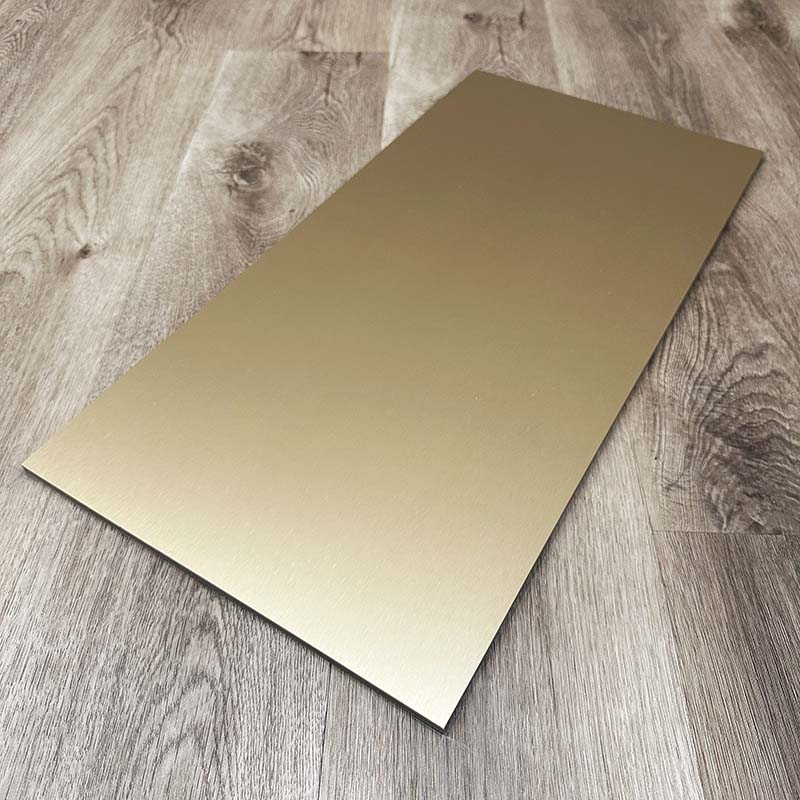
Surface laminations (such as a Metal Texture Carbon Crystal Wall Panel) can alter the overall fire and VOC profile of the board; certifications must apply to the finished product, not just the raw core.
Always mandate third-party lab reports (SGS, TÜV, Intertek) and independently verify tracking numbers before bulk procurement.
The Compliance Mandate: Why Certification Dictates Project Success
Installing non-compliant materials carries devastating legal and operational consequences. Fire marshals regularly force tear-outs of uncertified wall panels. These forced removals halt construction entirely. They ruin project timelines and trigger severe breach-of-contract penalties. Furthermore, installing materials containing toxic resins exposes building owners to sick building syndrome liabilities. Occupants could suffer respiratory issues. You could face crippling negligence lawsuits if the specified materials lack proper emission documentation.
A successful procurement cycle requires rigorous upfront verification. Materials must pass local commercial fire codes without question. They should seamlessly meet stringent environmental frameworks like LEED or WELL building standards. Once installed, they must maintain structural integrity indefinitely. Securing authentic certification proves you achieved these targets.
Buyers often fall victim to the "carbon crystal" blind spot. You must understand how factories manufacture this composite material. The core typically blends bamboo or wood powder, carbon powder, PVC resin, and calcium carbonate. Because ingredients vary, performance relies heavily on the exact extrusion and bonding process. A poorly extruded board behaves completely differently than a premium one. Therefore, standardized testing remains non-negotiable. You cannot assume all boards share identical properties merely based on a generic category name.
Common Mistakes in Procurement
Trusting factory-issued certificates without third-party lab verification.
Assuming a residential grade panel automatically passes commercial building codes.
Failing to specify exact material formulations in the purchase agreement.
Decoding Fire Resistance Standards for Carbon Crystal Boards
Fire safety evaluation relies on specific, measurable dimensions. You must scrutinize the Flame Spread Index (FSI) and Smoke Developed Index (SDI). North American buyers rely heavily on ASTM E84 testing. A true Class A rating requires an FSI between 0 and 25. It also demands an SDI below 450. European and Asian buyers use different frameworks. You must map EN 13501-1 or GB8624 standards to your local building codes. An EN 13501-1 rating of B-s1, d0 indicates excellent fire behavior. It means the panel resists flames, produces minimal smoke, and drops no flaming particles.
Commercial Fire Standards Comparison Chart
Standard
Region
Top Tier Rating
Key Performance Indicators
ASTM E84
North America
Class A
FSI ≤ 25, SDI ≤ 450
EN 13501-1
Europe
B-s1, d0
Limited flame spread, minimal smoke, no droplets
GB8624
Asia
Class B1 / A
High flame retardancy, low thermal output
Implementation reality often exposes flawed materials. A board might resist catching fire initially. However, if it produces thick, toxic smoke while smoldering, it fails commercial safety standards. Most fire fatalities result from smoke inhalation. You must demand precise smoke density data from suppliers. Do not accept a generic "fireproof" label.
The unique matrix of a Carbon Crystal Board naturally resists ignition. Manufacturers mix carbon powder and calcium carbonate into the substrate. Calcium carbonate acts as a powerful inorganic flame retardant. This composition provides superior thermal stability compared to traditional MDF or standard plywood. The panel resists warping under high heat. It actively slows flame propagation across the wall surface.
VOCs, Formaldehyde, and Indoor Air Quality (IAQ) Verification
Indoor air quality defines modern commercial building safety. The raw carbon crystal core itself remains generally stable and non-toxic. The actual VOC risk lies in the lamination process. Factories use PUR hot-melt adhesives to bind decorative films to the dense core. Cheap, unverified adhesives release dangerous formaldehyde gas into enclosed spaces over time.
You must enforce strict acceptable thresholds during procurement. The E0 standard permits emissions of ≤ 0.050 mg/m³. This represents the minimum acceptable baseline for residential or hospitality projects. The ENF standard represents the best-in-class tier. It requires emissions of ≤ 0.025 mg/m³, indicating a zero-formaldehyde-added manufacturing process. North American buyers must identify CARB Phase 2 or EPA TSCA Title VI compliance markers. These specific certifications prove the manufacturer actively controls chemical off-gassing.
Evidence-oriented evaluation protects your project. You must learn how to read a genuine chamber test report. Testing facilities place the material inside a sealed, temperature-controlled chamber. They measure actual gas emissions over several days. Reject any suppliers who only provide "component-only" tests. Testing raw bamboo powder means nothing. You need testing data for the fully assembled, laminated panel.
Best Practices for IAQ Compliance
Request English-language VOC chamber test reports from internationally recognized labs.
Cross-reference the exact adhesive brand used in the factory's production line.
Specify ENF standards for healthcare, educational, or high-density commercial spaces.
Evaluating Finishes: How the "Metal Texture Carbon Crystal Wall Panel" Impacts Compliance
Premium aesthetics frequently introduce unexpected compliance hurdles. Designers often specify striking finishes like the Metal Texture Carbon Crystal Wall Panel. These luxurious options involve applying metallic PET or specialized PVC laminates onto the board. This aesthetic upgrade creates a direct performance trade-off. The surface film fundamentally alters the chemical and thermal behavior of the unit.
Fire rating shifts occur frequently during lamination. A highly flammable metallic-look film can easily downgrade a pristine Class A core. The finished product might only achieve a Class B or even Class C rating. Buyers must ask a critical question during negotiations: "Is this fire certification for the bare board or the laminated panel?" Submitting a bare-board certificate for a heavily laminated product constitutes compliance fraud.
High-heat environments also expose adhesion vulnerabilities. Direct sunlight or commercial kitchen heat can cause severe off-gassing. Substandard films may undergo thermal delamination if the factory utilized low-quality adhesives. The metallic texture peels away from the substrate. This ruins the aesthetic and releases trapped chemical compounds into the air.
Implement a strict shortlisting logic to mitigate this risk. Require suppliers to provide separate, specific test reports for their textured lines. A generic baseline report for a plain panel provides zero legal protection. If they sell a metal-textured variant, they must prove that specific variant passed the ASTM E84 or EN 13501-1 protocols.
Supplier Shortlisting: Red Flags and Verification Tactics
The global materials market contains numerous unreliable actors. Identifying fraudulent claims early saves immense frustration later. You must train your procurement team to spot immediate warning signs.
Watch for these specific red flags during initial outreach:
Red Flag 1: Blurred, expired, or truncated PDF certificates. Legitimate suppliers proudly share crystal-clear, multi-page testing dossiers.
Red Flag 2: Certifications issued by unrecognized, unaccredited local labs. If the lab lacks ISO/IEC 17025 accreditation, the data remains worthless.
Red Flag 3: Reluctance to send physical samples for independent local testing. Honest manufacturers encourage independent verification.
You must apply a rigid verification framework. Never take a PDF at face value. Locate the unique lab report tracking number on the document. Visit the official database of the issuing agency, such as SGS, TÜV, or Intertek. Enter the report ID into their verification portal. Confirm the client name, product name, and testing results perfectly match the provided document. If the database returns no results, immediately disqualify the supplier.
Your Essential Procurement Checklist
Request a physical sample of the exact specified finish.
Request the matching SGS or TÜV report for that specific product configuration.
Verify the report ID directly through the testing agency's official online portal.
Conduct a localized pilot installation to test cutting, handling, and visual consistency.
Finalize the bulk order only after writing performance guarantees into the contract.
Conclusion
Sourcing reliable architectural panels requires a skeptical, compliance-first approach. You cannot afford to trust unverified claims when building safety hangs in the balance. Aesthetic appeal and unit prices remain strictly secondary to verifiable safety data. A cheap, beautiful panel becomes a massive liability if it fails a fire inspection or sickens occupants.
Take proactive control of your procurement pipeline today. Advise your purchasing teams to demand full, unredacted testing dossiers immediately. Refuse to initiate any Request for Quotation (RFQ) until suppliers prove their claims. By independently verifying lab reports and mandating full-assembly testing, you secure your project's success. You protect your clients, uphold your legal obligations, and ensure lasting structural safety.
FAQ
Q: Does carbon crystal board require different fire certifications than SPC or WPC wall panels?
A: The testing standards (like ASTM E84) are the same, but carbon crystal boards generally achieve better inherent structural stability under heat due to the carbon-calcium matrix. You evaluate them using identical metrics, but expect higher thermal endurance from carbon crystal combinations.
Q: Can a Metal Texture Carbon Crystal Wall Panel be used in commercial kitchens?
A: Only if the surface film and adhesive pass specific commercial fire codes (Class A/B1) and grease/moisture resistance tests, as standard residential films may warp or emit VOCs under high heat. Verify the film's temperature tolerance before installation.
Q: How long are SGS or TÜV testing reports valid for wall panels?
A: Typically 1 to 3 years, depending on the certification body. Buyers should reject reports older than 3 years as manufacturing formulations frequently change. Always demand up-to-date testing data reflecting the factory's current extrusion baseline.
The company was established in 2018 and specializes in new environmentally friendly indoor decorative materials such as SPC flooring, WPC flooring, carbon crystal flooring, wood veneer panels, and carbon crystal wall panels.